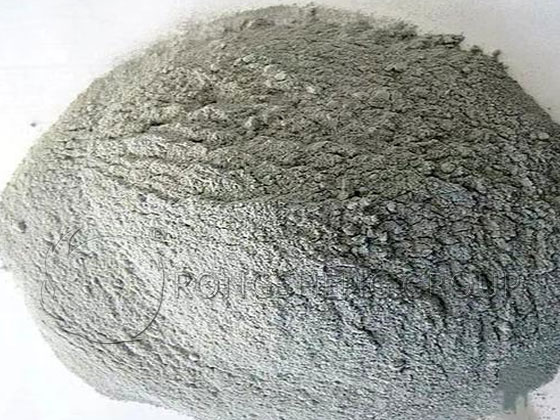
High-heat furnace cement, also known as aluminate cement, is a refractory building material specifically designed for high-temperature applications. In many industrial sectors and specialized engineering projects, the requirements for materials at high temperatures are quite stringent. Rongsheng Unshaped Refractory Castable Manufacturer will delve into the application of high-temperature furnace cement in high-temperature environments and its functional characteristics.
Applications of High-Heat Furnace Cement
Due to its unique functional characteristics, high-heat furnace cement has been widely used in many industrial fields.
- Metallurgy
High-temperature refractory cement plays a vital role in the metallurgical industry. The corrosive effects of high temperatures, alkaline substances, and acids during smelting place high demands on materials. The application of high-temperature refractory cement can effectively resist high-temperature corrosion of the furnace and the erosion of alkaline substances, extending the service life of equipment.
- Chemical Industry
In chemical enterprises, many processes require high-temperature conditions, which places higher demands on the high-temperature resistance of building materials. The application of high-temperature refractory cement can effectively prevent corrosion and erosion by chemical substances, playing an important role in ensuring the safe operation of equipment.
- Glass and Ceramics Industry
High-temperature kilns are indispensable equipment in the glass and ceramics industry. High-temperature refractory cement is widely used in the glass and ceramics firing process, able to withstand high-temperature corrosion and thermal stress, ensuring the normal operation of the kiln and product quality.
- Construction Industry
Due to limitations imposed by the external environment and internal usage conditions, some special construction projects, such as high-rise buildings and large bridges, require building materials capable of withstanding high temperatures. In these projects, high-temperature refractory cement plays a vital role in ensuring the safety and stability of building structures.
Functional Characteristics of High Heat Furnace Cement
High heat furnace cement possesses many unique functional characteristics, making it an ideal material for high-temperature environments.
- Excellent High-Temperature Resistance
High-temperature refractory cement maintains stability under extremely high temperatures, resisting softening, burning, and failure. It can withstand thermal stress and thermal shock at high temperatures, ensuring the normal operation and service life of equipment.
- Excellent Chemical Resistance
High-temperature refractory cement is resistant to chemical corrosion, acids, and alkaline substances. This makes it widely used in metallurgy, chemical industry, and other specialized industrial fields.
- Excellent Mechanical Strength and Abrasion Resistance
High-temperature refractory cement exhibits excellent mechanical strength and abrasion resistance, enabling it to withstand significant external forces and pressures under high temperature and pressure. Its high strength and abrasion resistance demonstrate excellent performance at high temperatures.
High-temperature refractory cement is an ideal high-temperature material. Its widespread application plays a crucial role in ensuring the normal operation of equipment and product quality in many industrial fields. In the construction and industrial sectors, high-temperature refractory cement possesses excellent functional properties and is an indispensable material.
The Difference Between Refractory Mortar and Refractory Cement
Many customers are confused about the differences between refractory mortar and refractory cement. Rongsheng Refractory Materials Manufacturer will explain the differences between the two for you.
When constructing kilns, a binder called refractory mortar or jointing material (mixed with water to form refractory mortar) is used. It is a major auxiliary material in kiln construction and serves as the joint filler for bonding refractory bricks, ensuring a strong initial bond and preventing detachment.
Refractory mortar should be selected according to the material of the refractory bricks used and should not be mixed. Refractory mortar is classified according to its material into: clay-based, high-alumina, silica-based, magnesia-based, carbonaceous, corundum-based, and mullite-based pre-made binders. For example, high-alumina refractory mortar is used for high-alumina bricks, magnesia refractory mortar for magnesia bricks, and silica refractory mortar for silica bricks, etc.
Refractory mortar is supplied in dry powder form. When using it, a liquid binder is added and mixed thoroughly to form a slurry of suitable viscosity. This type of slurry is collectively referred to as high-temperature refractory mortar, high-temperature refractory slurry, or high-temperature binder. Based on the bonding method of the liquid binder, it is classified into: water glass-bonded refractory mortar, phosphate-bonded refractory mortar, aluminum phosphate-bonded refractory mortar, etc.
Refractory mortar is composed of refractory powder and additives. Almost all refractory raw materials can be made into powders used to formulate refractory mortar. Refractory mortar made by adding appropriate binders to refractory clinker powder is called ordinary refractory mortar; its strength at room temperature is relatively low, and it only achieves higher strength at high temperatures through the formation of a ceramic bond. Refractory mortar using air-hardening or heat-hardening binders is called chemically bonded refractory mortar; it hardens through a chemical reaction before reaching the temperature required to form a ceramic bond.
The particle size of refractory mortar varies depending on the application requirements; its limiting particle size is generally less than 1 mm, and some are less than 0.5 mm or even finer. The material of the refractory mortar should be chosen to be consistent with that of the refractory products used in the masonry. Besides being used as a jointing material, refractory mortar can also be applied as a protective coating for the lining using a coating or spraying method.
Main characteristics: Good plasticity, convenient construction, high bonding strength, and strong corrosion resistance. Based on chemical properties, it is classified into acidic refractory mortar, neutral refractory mortar, and alkaline refractory mortar. In addition, there are refractory mortars for special applications.
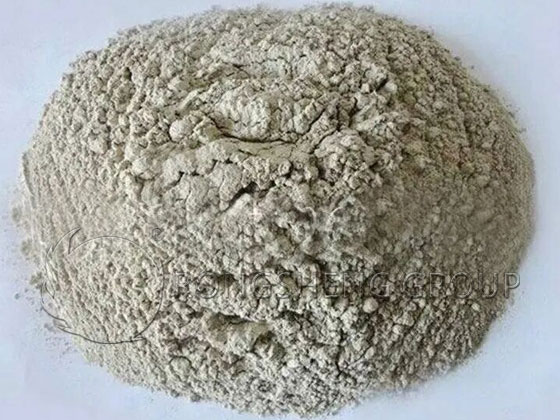
Refractory cement, also called aluminate cement or high-alumina cement, is a hydraulic cementitious material made from bauxite and limestone through calcination. It is a clinker with calcium aluminate as the main component and an alumina content of approximately 50%, which is then ground.
Aluminate cement is usually yellow or brown, but can also be gray. The main minerals are monocalcium aluminate (CaO·Al₂O₃, abbreviated CA) and other aluminates, as well as small amounts of dicalcium silicate (2CaO·SiO₂). It is used to bind various refractory aggregates (such as corundum, calcined high-alumina bauxite, etc.) to make refractory mortar or concrete, used as linings for industrial kilns.
The biggest difference between refractory mortar and refractory cement is that one is used as a mortar for building refractory bricks (mixed with water or other liquids), while refractory cement is used as a binder for various refractory aggregates and is used as a material for refractory castables for kiln linings.