In high-temperature industries such as iron and steel metallurgy, the poor insulation and rapid heat loss of refractory materials used in industrial kiln linings lead to excessively high kiln surface temperatures, resulting in increased energy consumption during ironmaking and steelmaking processes. This not only hinders the lifespan of refractory materials but also affects production schedules and endangers the safety of production personnel.
Low Thermal Conductivity Refractory Materials for High-Temperature Kilns
For example, the high thermal conductivity of refractory materials used in steel ladles leads to accelerated heat loss, which triggers a series of chain reactions during steelmaking:
- Rapid heat loss causes excessively high ladle shell temperatures, resulting in severe deformation;
- Rapid cooling of molten steel leads to cold forming, nodule formation, and even ladle flow interruption and final pouring.
Therefore, developing low thermal conductivity refractory materials for high-temperature kilns has become an urgent need for major steel mills. The high porosity and low thermal conductivity of lightweight materials offer new insights into the preparation of insulating refractory materials for high-temperature kiln linings. However, the preparation of lightweight refractories is often achieved by changing process conditions or adding additives, which suffers from poor controllability of pore size distribution. Consequently, functionalized refractory raw materials have rapidly developed, such as lightweight mullite, alumina hollow spheres, and gel powder. These raw materials facilitate the preparation of lightweight thermal insulation refractory materials. However, their excessively light weight and high price also limit their industrial application.
Meanwhile, with increasing production requirements, lightweight, high-strength refractory materials suitable for higher temperatures have gradually become the focus. Using microporous lightweight mullite, multiphase hollow spheres, high-alumina bauxite, silica, and alumina micropowder as main raw materials, the effects of lightweight aggregate composition, micropowder composition, bonding system, and pore-forming agent on the performance and structure of lightweight high-alumina castables were studied, and a lightweight high-alumina castable with good high-temperature performance was developed. Using mullite microspheres, α-Al₂O₃ micropowder, and silica micropowder as raw materials, and AlF₃·3H₂O and V₂O₅ as additives, a lightweight, high-strength mullite microsphere thermal insulation refractory material was prepared. Lightweight, high-strength, and highly thermally shock resistant corundum-mullite refractory materials were prepared by using alumina hollow spheres as pore-forming agents and AlF3·3H2O as additives to control the pore characteristics of corundum-mullite and the in-situ formation of mullite whiskers.
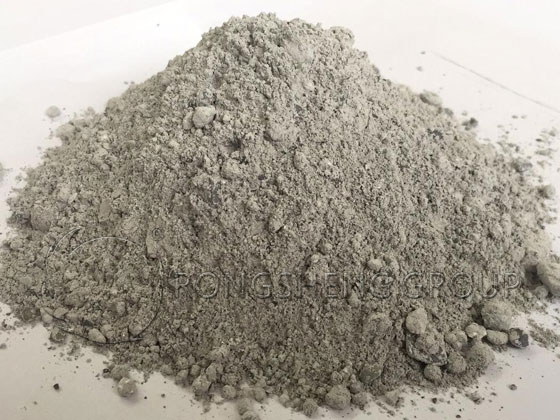
Preparation and Properties of Porous Spherical Mullite Castables
Existing research shows that recent studies on the performance of aluminosilicate materials have largely focused on aggregate substitution or the use of additives. Alumina, a commonly used and relatively inexpensive raw material in aluminosilicate materials, has had its impact on aluminosilicate castables rarely reported.
- To prepare a high-temperature kiln insulating refractory material with excellent thermal insulation and mechanical properties, porous spherical mullite-based castables were prepared using porous spherical mullite, fine alumina powder, α-Al₂O₃ micropowder, silica powder, and Secar 71 cement as the main raw materials.
- The effects of fine alumina powder content on the mechanical properties, thermal conductivity, erosion resistance, and thermal shock resistance of the porous spherical mullite-based castables were investigated.
The results show that changing the content of fine alumina powder can improve the thermal insulation, thermal shock resistance, and erosion resistance of the porous spherical mullite-based castables while maintaining high mechanical properties.
With increasing bauxite powder content, the mechanical properties of porous spherical mullite-based castables did not change significantly. However, the thermal conductivity decreased slightly, and the erosion resistance showed considerable differences, with thermal shock stability initially increasing and then decreasing. When the bauxite powder content was 28% (mass fraction), the porous spherical mullite-based castable exhibited good mechanical properties, thermal shock stability, and erosion resistance. The thermal conductivity at 1000℃ was 0.905 W·m⁻¹·K⁻¹. The high-temperature flexural strengths of the porous spherical mullite-based castable at 1100℃ and 1400℃ were 22 MPa and 5 MPa, respectively, indicating good thermal insulation performance, high flexural strength, and a certain degree of resistance to ladle slag erosion.
The thermal conductivity of the porous spherical mullite-based castable is lower than that of high-alumina castables used in tundish and ladle permanent layers, making it a viable alternative to high-alumina castables used in tundish and ladle permanent layers to reduce heat loss.
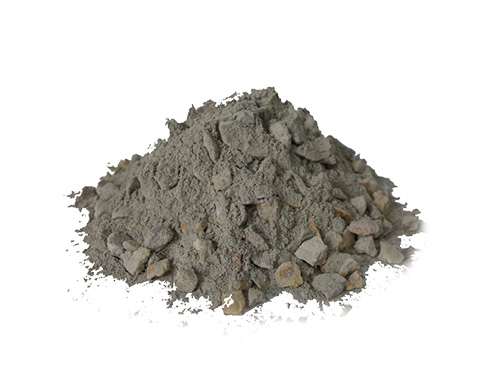
Application Effects of Lightweight Mullite Castables
Lightweight mullite castables are primarily used as integral linings for regenerators in heating furnaces. This working layer operates continuously at a high temperature of 1350℃, enduring temperature fluctuations within the kiln and the erosion and wear of high-temperature gases. During construction, the casting thickness is 300-400mm, with a water content of 18%-19%. In practical applications, this castable demonstrates advantages such as high workability, high-temperature strength, low thermal conductivity, good insulation, and good thermal shock resistance. Furthermore, its low-cement, micro-powder composite bonding allows for direct contact with the flame.
Energy-saving and environmentally friendly lightweight mullite castables, with their superior workability and high-temperature performance, have become ideal refractory linings for regenerators in heating furnaces. In addition, their application in thermal kilns such as aluminum melting furnaces, fluidized bed boilers, and gasifiers has also seen widespread development.