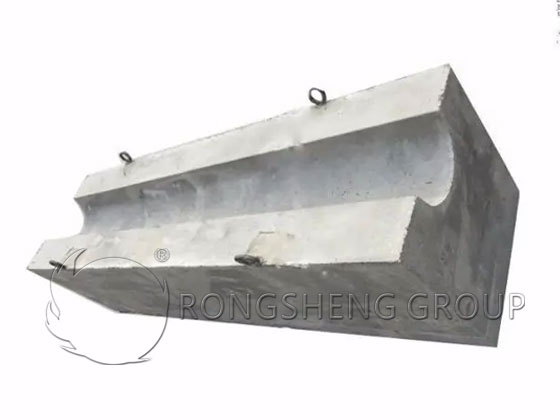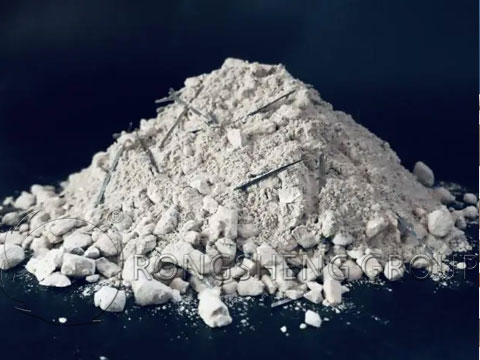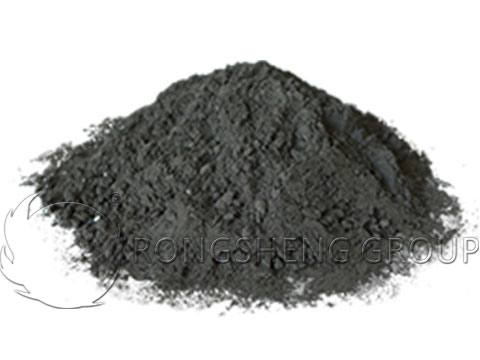
Precast Refractory Shapes are products made according to the shape of the application area to facilitate on-site construction. They are produced by pouring the refractory castable into a mold and vibrating it into various shapes after the refractory castable is produced.
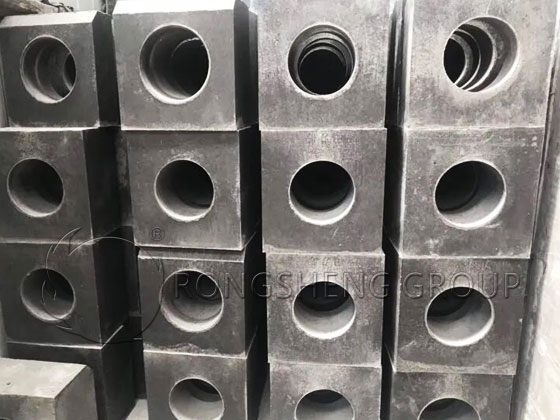
Water Addition in Precast Refractory Shapes Manufacturing
The amount of water added during the manufacturing process of Precast Refractory Shapes is crucial. Excessive water leads to a sparse particle size, affecting the strength and performance of the finished product. Insufficient water results in a lack of fluidity, making it impossible to form. The water addition amount for each type of precast refractory castable is determined based on the raw materials and binders used in the mixing process.
If the binder, such as high-alumina cement, is used in large quantities, resulting in a high calcium content, the water addition amount will also increase. Currently, most castable products utilize low-cement technology to reduce water addition, shorten drainage time, and enhance product strength. A moderate water addition improves product fluidity and facilitates construction. Furthermore, reduced drainage time results in higher product strength, lower porosity, and consequently, a longer service life for the Precast Refractory Shapes.
Excessive water addition fails to enhance the fluidity of the castable. Moreover, during the manufacturing process, the use of a vibrator can cause water to splash out, quickly rising to the surface while large aggregates sink to the bottom. This also generates a large number of water bubbles, meaning excessive and large pores. This prolongs the demolding cycle of Precast Refractory Shapes, and even if demolding is successful, the product’s strength and usability will suffer from cracking and eventual detachment during use.
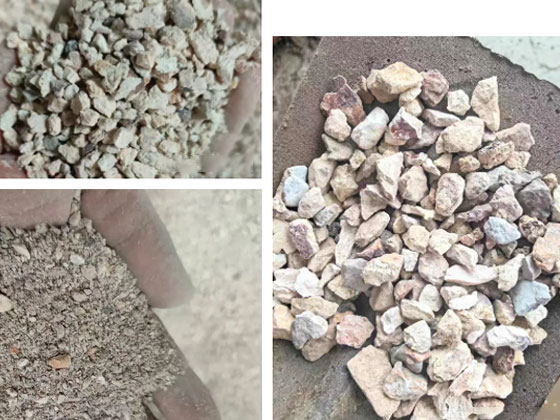
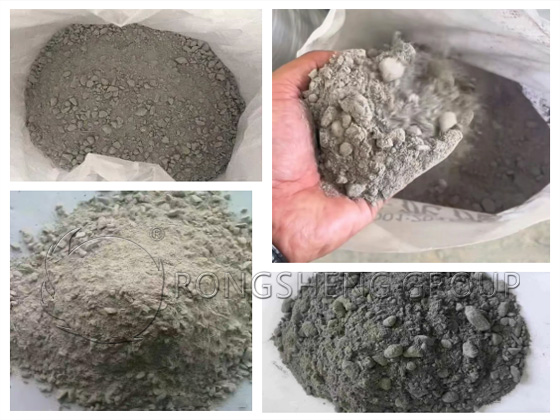
The appropriate amount of water added depends on the different raw material matrixes. During mixing, aggregates should be added first, followed by fine powders, then the binder, and finally the appropriate proportion of water. This simplifies the manufacturing process, reduces drainage, increases product strength, and lowers porosity.
Therefore, the amount of water added during the pre-fired Precast Refractory Shapes manufacturing process is crucial and cannot be arbitrarily increased. The principle is to add less rather than more, which enhances the product’s performance and facilitates faster and more convenient construction.
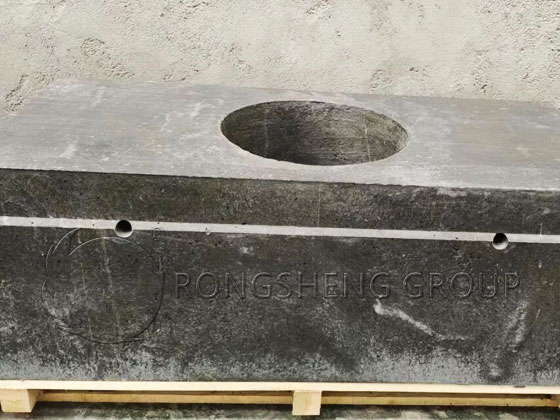
Can Precast Refractory Shapes be Used Without Baking?
Yes, Precast Refractory Shapes can be used without baking at a certain temperature. However, this requires the addition of explosion-proof fibers to the pre-made process mix to ensure sufficient drainage of crystal water. Alternatively, a long natural drying time can also allow them to be used without baking.
Precast Refractory Shapes are an extension of refractory castables. They are made by mixing raw material granules and powders, binders, and water to form a castable. This mixture is then poured into pre-made molds and undergoes dehydration, baking, and drainage processes before use. Comparatively, precast refractory components that have been baked at 300℃ have a better service life and safety than those that haven’t been baked.
However, if the quantity of precast refractory components used is large and the operating conditions are not demanding, adding explosion-proof materials during production and ensuring sufficient drainage of moisture allows them to be used during the industrial furnace lining baking process as the furnace temperature gradually increases. Unbaked pre-fired refractory precast components, while possessing higher strength, are more prone to breakage during transportation, handling, and construction.
Currently, the proportion of unbaked Precast Refractory Shapes used in the market is higher than that of baked ones. This is due to lower costs, coupled with improvements in castable technology, resulting in performance comparable to products from earlier technologically advanced periods.
However, under harsh operating conditions, such as excessively high furnace lining temperatures and the need for emergency repairs, where the furnace lining temperature rises rapidly, unbaked Precast Refractory Shapes, even those unbaked, offer better performance and a longer service life. Baked precast refractory components, on the other hand, have higher strength, better thermal shock resistance, and are less likely to crack during use.