Lightweight castable, also known as insulating castable refractory, is a lining material used in the insulation layer of industrial kilns. However, the performance of lightweight castable is determined by raw materials, process proportions, production process control, construction site specifications, and proper drying and baking.
Factors Determining the Performance of Lightweight Castables
First, the fundamental factor determining the performance of lightweight castables is the careful selection of lightweight aggregates and powders, and the rationality of particle size distribution. Water usage should be minimized to maximize the density and strength of the insulating castable refractory.
Secondly, the binder is crucial in determining the initial strength and high-temperature performance of lightweight castables. Generally, lightweight insulating castable refractory with high cement or water glass content requires the use of micro-powders to enhance strength and improve performance.
Chemically bonded lightweight castables typically employ composite bonding to optimize performance across different temperature ranges. However, the binder ratio must be carefully controlled; too much binder reduces strength and refractoriness, while too little results in insufficient strength at room temperature. Accelerators and retarders should be avoided unless used to adjust the setting rate during construction; their addition should be minimized based on actual conditions. Appropriate amounts of explosion-proof fibers can be added to create venting channels during baking, preventing material cracking under steam pressure.
By controlling the production, process proportions, and construction stages, the performance of lightweight insulating castable refractory is essentially controlled. The selection of the type of lightweight castable depends on the properties, temperature, and size of the industrial furnace lining. For example, lightweight castables suitable for acidic media are used for acidic furnace linings, while neutral materials are chosen for neutral lightweight insulation. The bulk density also depends on the temperature of the furnace lining, determining whether a lightweight castable with a bulk density of 1.0, 0.8, or 0.6 is used.
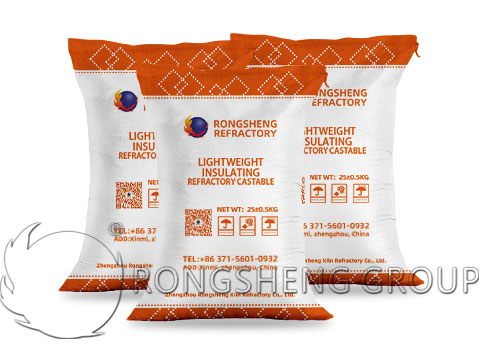
Design and Performance Testing of a Lightweight Insulating Refractory Castable
By selecting lightweight mullite aggregate with a porous structure, alumina hollow spheres, and zirconium-containing high-alumina refractory fibers with low thermal conductivity, the thermal insulation performance of the furnace roll is improved, reducing heat loss carried away by cooling water. Simultaneously, the bulk density is reduced, decreasing the weight of the furnace roll and the power consumption for rotation. The addition of 0.1~1 mm slag bauxite compensates for the performance degradation of lightweight aggregates smaller than 1 mm. Furthermore, the excellent thermal shock stability and high-temperature performance of slag bauxite improve the overall performance of the insulating castable refractory. Cement, silica, and -Al₂O₃ micro powder are used as composite binders. Both hydration and coagulation bonding mechanisms are introduced to improve the low, medium, and high-temperature strength of the material.
The addition of a small amount of spodumene powder promotes sintering, improving the sintering condition of the castable under operating conditions and promoting the formation of a high-temperature ceramic bonding phase in the furnace roll castable insulation lining, thus enhancing the insulation lining’s resistance to breakage.
By adding zirconium-containing high-alumina refractory fibers, the reinforcing and toughening effects produced by their pull-out action within the matrix are utilized to improve the mechanical vibration resistance and impact toughness of the furnace roll castable.
By adding kyanite powder as an expanding agent, the volume expansion caused by the irreversible decomposition of kyanite into mullite and free SiO₂ at high temperatures offsets the volume shrinkage of the insulating castable refractory at high temperatures. This prevents cracking and detachment of the castable layer caused by thermal expansion mismatch between the castable and the metal roll body. The use of admixtures such as water-reducing agents, organic defoamers, and silane coupling agents improves the workability of the castable and reduces the amount of water required, thus improving the construction quality and overall performance of the furnace roll castable insulation lining.
Through laboratory formulation design and optimization, the optimal formulation was finally determined.
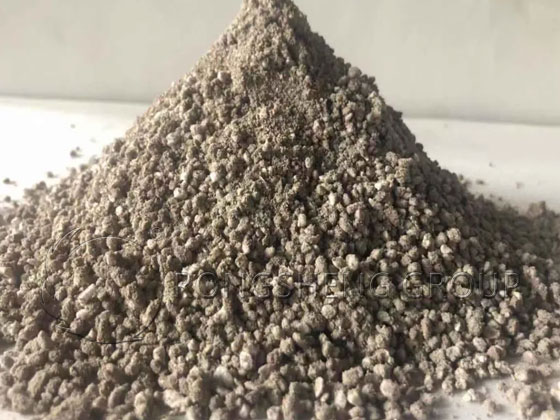
Performance Testing of Lightweight Insulating Refractory Castable
Materials were weighed according to the optimized formula, mixed evenly, and then water was added for stirring. The mixture was then cast into 40mm × 40mm × 160mm samples, cured naturally at room temperature for 24 hours, demolded, and dried at 110℃ for 24 hours. Some samples were further heat-treated at 1100℃ and 1300℃ for 3 hours each. The bulk density, flexural and compressive strength, thermal conductivity, and other physical properties of the samples after different temperature treatments were then tested according to relevant standards.
Compared to conventional furnace roll heavy castable (bulk density 2.2 g·cm⁻³, thermal conductivity 0.738 W·(m·K)⁻¹), the bulk density is reduced by 25.8%, resulting in a lighter bulk density. The thermal conductivity is reduced by approximately 57%, leading to superior insulation performance. Furthermore, the developed lightweight insulating castable exhibits high low, medium, and high temperature strength. With increasing temperature, the mechanical properties of the castable remain relatively stable without significant fluctuations. It is evident that the rational design of various additives in the formulation significantly improves the flexural strength, compressive strength, and resistance to mechanical vibration of the lightweight castable. The room temperature compressive strength of the castable reaches 24.5 MPa, far exceeding the mechanical properties of ordinary lightweight insulating castable refractory. It not only meets the requirements for demolding and handling but also fully satisfies the requirements for direct use in the furnace after baking at 300℃ using the furnace rollers. The low linear shrinkage rate after various temperature treatments indicates good volume stability.