Explosion Resistance and Thermal Shock Stability of Low-Cement Castables

Low-cement castables are widely used due to their advantages, such as low water requirement, high density, excellent volume stability, and high strength. However, their relatively poor gas permeability can lead to issues like explosive spalling, surface peeling, or flaking during the initial drying and firing processes. In severe cases, this can result in the complete structural failure of the castable lining, causing significant losses for the user. Consequently, improving the explosion-proof (anti-spalling) performance of low-cement castables is of great importance for their practical application and further development.
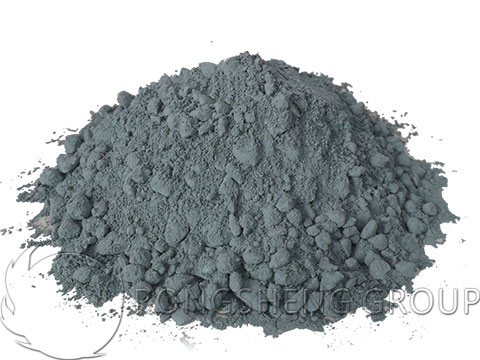
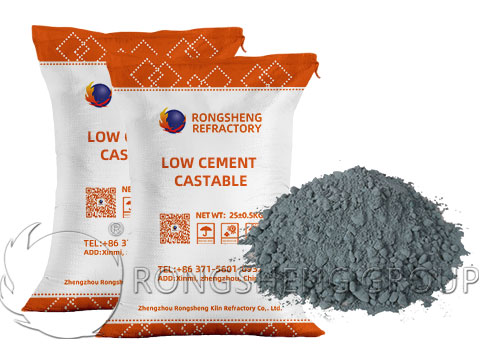
Low Cement Castable Refractory Material

Free Quote

    Leave Your Requirements

    Your Name (required)

    Your Email (required)

    Your Phone


    Your Requirements(required)

    Currently, the primary method for enhancing the explosion-proof performance of castables is the addition of anti-spalling fibers, which serve to increase the material’s gas permeability. This paper investigates the effects of anti-spalling fiber content and silicon carbide (SiC) content on the explosion-proof performance of low-cement castables. Furthermore, it examines the influence of anti-spalling fiber content on the porosity of these castables, as well as the impact of silicon carbide content on their thermal shock stability.

    Raw Materials for Low-Cement Castables

    The castables used in the experiments were low-cement castables. The primary raw materials included 85-grade homogeneous bauxite clinker, 97-grade black silicon carbide, α-Al₂O₃ micropowder, 95-grade silica fume, and Secar 71 cement. Polypropylene fibers were used as anti-explosion fibers.

    Specimen Preparation and Performance Testing

    The ingredients were proportioned according to the designed formulation. The mixture was dry-mixed in a mixer for 1 minute, followed by the addition of a specific amount of water and wet-mixing for 3 minutes. The resulting material was cast into specimens measuring 40 mm × 40 mm × 160 mm and 230 mm × 114 mm × 65 mm. After curing at 20°C for 24 hours, some specimens were placed directly into a preheated furnace; they were held at the target temperature for 15 minutes and then observed for signs of spalling (explosive spalling). Other specimens underwent heat treatment—at 110°C for 24 hours, 200°C for 24 hours, or 1400°C for 3 hours—and were subsequently tested for apparent porosity and thermal shock resistance. Apparent porosity was measured in accordance with the YB/T 5200 standard, while thermal shock resistance was evaluated using the water-quenching method (in accordance with the YB/T 376.1 standard).

    Experimental Results and Discussion

    1. Influence of Anti-Explosion Fiber Content on the Spalling Resistance and Porosity of Castables

    The results of the spalling tests on low-cement castable specimens with varying anti-explosion fiber contents indicate that specimens without these fibers spalled at 600°C. As the content of anti-explosion fibers increased, the spalling temperature of the castable specimens rose to 700°C, 900°C, and above 1000°C, respectively. Furthermore, an increase in the anti-explosion fiber content led to a notable rise in the apparent porosity of the specimens after heat treatment at 200°C for 24 hours. Relevant literature indicates that when anti-explosion fibers are incorporated into castables, they shrink and melt during the heating and drying process. This creates slender, open-ended channels within the material, which increases its gas permeability and accelerates the escape of water vapor. Consequently, this enhances the castable’s resistance to explosive spalling and improves its overall anti-explosion performance.
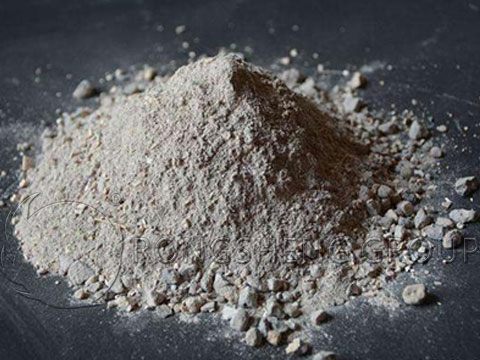
    Corundum-Spinel Low Cement Castable
    Corundum-Spinel Low Cement Castable

    Free Quote

      Leave Your Requirements

      Your Name (required)

      Your Email (required)

      Your Phone


      Your Requirements(required)

      1. Effect of Silicon Carbide Content on the Spalling Temperature and Thermal Shock Stability of Castables

      With the content of anti-explosion fibers held constant, the influence of varying silicon carbide (SiC) concentrations on the spalling temperature and thermal shock stability of low-cement castables was investigated.

      Experimental results regarding the spalling resistance of castable specimens with different SiC contents indicate that as the SiC concentration increases from 0% to 13%, the spalling temperature of the specimens decreases from 900°C to 800°C, showing a downward trend.

      This reduction is primarily attributed to the formulation adjustments: as the SiC content increases, the content of 85-grade homogeneous bauxite decreases (while the combined total of SiC and 85-grade homogeneous bauxite remains constant). Since the thermal conductivity of SiC is higher than that of 85-grade homogeneous bauxite, the overall thermal conductivity of the castable increases as the SiC content rises and the bauxite content falls. Consequently, higher transient steam pressure is generated within the castable at elevated temperatures; once this steam pressure exceeds the tensile strength of the material, spalling occurs. The experimental data show that while the spalling temperature of the low-cement castables exhibits a downward trend as the SiC content increases, the magnitude of this decrease is relatively small.

      Regarding thermal shock stability, the test results for specimens heat-treated at 1400°C for 3 hours show a significant improvement: the number of thermal shock cycles the material can withstand increases from 4 to 25 as the SiC content rises. This trend is both pronounced and substantial. There are two primary reasons for this improvement.

      • First, there is a difference in the coefficients of thermal expansion (CTE) between the 97-grade SiC and the 85-grade homogeneous bauxite clinker; the 97-grade SiC has a lower CTE, whereas the 85-grade homogeneous bauxite clinker has a higher CTE. This mismatch in the coefficient of thermal expansion leads to the formation of microcracks within the castable. As the silicon carbide content increases—accompanied by a corresponding decrease in the content of the 85-grade homogenized bauxite—the overall coefficient of thermal expansion of the castable is reduced. This, in turn, lowers the thermal stress experienced by the material and improves its thermal shock stability.
      • Furthermore, increasing the silicon carbide content while reducing the 85-grade homogenized bauxite leads to a gradual rise in the overall thermal conductivity of the castable. This increase in thermal conductivity plays a significant role in enhancing the material’s thermal shock stability; specifically, higher thermal conductivity helps to reduce the internal thermal stress generated when the castable is subjected to thermal shock, thereby improving its overall thermal shock resistance.

      In summary, the following conclusions can be drawn:

      • First, increasing the content of explosion-proof fibers significantly contributes to raising the apparent porosity of low-cement castables and improving their explosion-proof performance.
      • Second, reducing the silicon carbide content helps improve the spalling resistance of low-cement castables, though the effect is not very pronounced; conversely, increasing the silicon carbide content significantly enhances the thermal shock stability of low-cement castables after heat treatment at 1400°C.

      Thermal-Shock-Resistant Low-Cement Castable

      Definition: A thermal-shock-resistant low-cement castable is a high-performance refractory material. By optimizing the mix design—reducing the cement content to 4%–8%—it achieves significantly enhanced thermal-shock resistance (the ability to withstand rapid temperature fluctuations), while also offering high strength, low porosity, and excellent high-temperature stability.
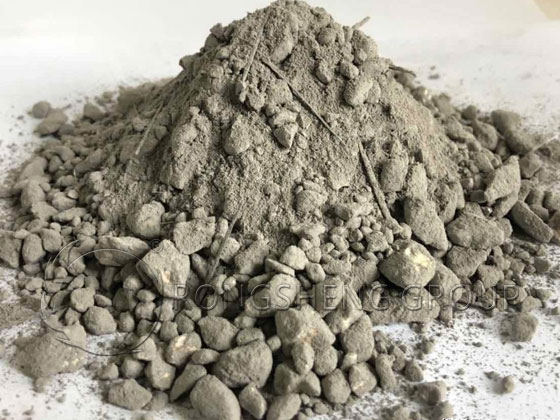
      Low Cement Steel Fiber Reinforced Castable
      Low Cement Steel Fiber Reinforced Castable

      Free Quote

        Leave Your Requirements

        Your Name (required)

        Your Email (required)

        Your Phone


        Your Requirements(required)

        Outstanding Thermal-Shock Resistance

        Low-Cement Matrix: Minimizes the formation of low-melting-point phases (such as anorthite) caused by CaO at high temperatures, thereby preventing material spalling or cracking during thermal cycling.

        Micro-crack Mechanism: Ultrafine powder fillers create a dense structure, where localized micro-cracks effectively absorb thermal stress (with the critical micro-crack propagation depth being less than or equal to the depth of the thermal stress impact).

        Optimized Aggregate Grading: Utilizes low-expansion aggregates—such as corundum or mullite (with a coefficient of thermal expansion ≤ 8×10⁻⁶/℃)—that are matched to the thermal expansion characteristics of the matrix, significantly reducing interfacial stress.

        Key Aspects of Low-Cement Technology

        Cement Substitution: Employs α-Al₂O₃ ultrafine powder (particle size < 1 μm) and silica fume (reactive SiO₂) to form a hydrated bonding network, effectively reducing the risk of high-temperature shrinkage and cracking.

        Water Requirement: Requires only 5%–7% water (compared to 10%–15% for conventional castables), which lowers porosity to 13%–18% and substantially increases material density.

        Typical Performance Indicators of Thermal-Shock-Resistant Low-Cement Castable

        Items Typical Value
        Cement Content 4%-8%
        Bulk density ≥2.8 g/cm³
        Flexural Strength at 110℃ 10-15 MPa
        Flexural Strength at 1500℃ ≥25 MPa
        Thermal Shock Cycles (1100℃ Air-Cooled) ≥50 cycles without damage (standard materials only last 20–30 cycles)
        Linear Change rate (1600℃×3h) ±0.2%

        Thermal-Shock-Resistant Low-Cement Castable Application Scenarios

        Environments subject to rapid thermal cycling: Ladle linings, RH vacuum refining vessel covers, firing zones of lime kilns, and linings for hazardous waste incinerators.

        High-temperature, high-wear components: Cyclone separators in circulating fluidized bed (CFB) boilers and coal-injection pipes at the discharge ends of cement rotary kilns.

        Performance Comparison: Offers a service life more than twice that of conventional high-cement castables (containing 12% CaO) and reduces high-temperature linear shrinkage by 40%.

        Key Considerations for Thermal-Shock-Resistant Low-Cement Castable Installation and Curing

        Moisture-proof Storage: Ultrafine powders are prone to moisture absorption and clumping; once opened, the material must be used within 3 days.

        Water Quality Control: The chloride ion (Cl⁻) content in the mixing water must be <50 ppm to prevent high-temperature corrosion.

        Drying/Heating Schedule: Maintain at 110°C for 24 hours → gradual temperature increase to 350°C (at a rate of ≤15°C/h) → final temperature of 600°C (total duration ≥96 hours). Strict adherence is required to prevent cracking caused by rapid dehydration.
          Get Excellent Service

          Please Leave Your Inquiry for Rongsheng Refractory Castable & Cement! We Will Reply You In 12 Hours!

          Your Name (required)

          Your Email (required)

          Your Phone

          Your Requirements(required)

          Low Cement Castable Refractory Cement For Industrial Furnaces High Dense

          Low cement castables have the characteristics of high density, low porosity, high strength, low wear, thermal shock resistance and erosion resistance. Low cement castables not only have the characteristics of traditional refractory materials, but also adopt the most advanced ultrafine powder application technology to improve the medium temperature strength and high temperature volume stability of the castables. The organizational structure of the product forms a firm anchor-shaped multi-directional crystal structure at high temperature. The overall structural connection stability of the lining is ensured, and the service life is increased by 3 times compared with traditional castables.

          Low Cement Castable Directly from Factory
          Low Cement Castable Directly from Factory

          Free Quote

            Leave Your Requirements

            Your Name (required)

            Your Email (required)

            Your Phone


            Your Requirements(required)

            Application of Different Types of Low-Cement Castables

            Low-cement and ultra-low-cement refractory castables have been widely used in industrial kilns in the fields of metallurgical industry, petrochemical equipment, machinery equipment manufacturing and decorative building materials at this stage, and have shown good use effects and economic benefits. Different types of low-cement castables play specific roles in various application fields as follows:

            1. Clay and high-alumina low-cement castables can be used as lining materials for various heat treatment furnaces such as hot blast furnaces, heating furnaces, soaking furnaces, and rotary kilns.
            2. Mullite low-cement castables are used for various high-temperature burner linings, x water-cooling pipe cladding and other applications.
            3. Corundum and chromium-containing corundum low-cement castables are suitable for the refining equipment parts outside the molten steel furnace, the lining of the power frequency induction furnace, the high-temperature wear-resistant lining of the petrochemical catalytic cracking reactor, and other occasions.
            4. Al2O3-SiC-C Low cement castables can be used for the lining of blast furnace tapping troughs, cupola tapping troughs, integral powder spraying guns for molten iron normalization treatment and other parts.
            5. Low cement castables of refractory and Cr-containing refractory can be used as linings of the triangular area of ​​the top of the iron-making electric arc furnace and the linings of the components of the external refining equipment of the molten steel furnace. For example, the overall spray gun lining for the spouting metallurgical industry, the RH and DH vacuum pump degassing device and the prepreg tube lining, the DC induction furnace lining, and the high temperature wear-resistant lining of the catalytic cracking tubular reactor of the petrochemical equipment.
            6. Low cement castables of MgO-Al2O3 or Al2O3-MgO-Al2O3 are used as lining materials for equipment such as ladles and tapping troughs.

            In summary, different types of low cement castables play an important role in various industries and have been widely used and promoted.

            Rongsheng Low Cement Castable Materials
            Rongsheng Low Cement Castable Materials

            Free Quote

              Leave Your Requirements

              Your Name (required)

              Your Email (required)

              Your Phone


              Your Requirements(required)

              Advantages and Characteristics of Rongsheng High-Strength Low-Cement Castables

              Rongsheng Refractory Castables Manufacturer has rich experience in the production and sales of refractory materials. Rongsheng’s environmentally friendly fully automatic amorphous refractory production line provides a reliable guarantee for the timely delivery of Rongsheng’s high-quality refractory castable products. After years of practical experience, Rongsheng has discovered the application advantages and characteristics of high-strength low-cement castables, which can effectively extend the service life of high-temperature industrial furnace linings. If you need to buy high-strength low-cement refractory castables, please contact Rongsheng for free samples and quotes. Happy to share and make progress together. Next is the advantages and characteristics of Rongsheng’s high-strength low-cement castables.

              1. Improve the refractoriness and high temperature strength of the refractory lining.

              Due to the low CaO content in low cement castables, the formation of low eutectic phases in the material can be reduced. Thereby improving the refractoriness, high temperature strength and resistance to slag erosion, especially the cement-free castable has better performance.

              1. The refractory lining has low porosity and high bulk density.

              The amount of mixing water used in the construction of low cement castables is only 1/2 to 1/3 (about 4% to 6%) of ordinary low cement castables. Therefore, the porosity is low and the bulk density is high.

              1. After the construction of the refractory lining is completed, less cement hydrate is generated.

              After the low cement castable is formed and cured, less cement hydrate is generated, and even during heating and baking, there is no phenomenon of a large number of hydration bonds being destroyed and the medium temperature strength being reduced. The low cement castable will gradually sinter as the heat treatment temperature increases, and the strength will gradually increase.

              1. It can improve the structural stability of the refractory lining.

              Low cement castable combines the characteristics of traditional refractory materials, adopts ultrafine powder application technology, and significantly improves the medium-temperature strength and high-temperature volume stability of the castable, so that the product’s organizational structure forms a firm anchor-shaped multi-directional crystal structure at high temperatures. It ensures the overall structural connection stability of the lining, and its service life can be increased by 3 times compared to traditional castables.

                Get Excellent Service

                Please Leave Your Inquiry for Rongsheng Refractory Castable & Cement! We Will Reply You In 12 Hours!

                Your Name (required)

                Your Email (required)

                Your Phone

                Your Requirements(required)

                Low Cement Refractory Castable for Cement Kiln Lining

                With the continuous progress of the production and use technology of monolithic refractories, especially the development of low-cement refractory castables, self-flowing castables, and wet injection technology. The refractory lining used in the new dry-process cement kiln system has gradually developed into a castable-based lining structure.

                Refractory Materials in Cement Kiln
                Refractory Materials in Cement Kiln

                Multifunctional refractory castables have many functions such as high early strength, high thermal strength, alkali resistance, wear resistance, and heat insulation. For the vulnerable parts in the new dry process cement kiln system. Such as the kiln mouth, the top of the kiln door cover and the blanking slope, the low wall of the grate cooler, and the high-temperature area on the top of the grate cooler. Coal injection pipe, tertiary air pipe elbow, and other parts. Various refractory castables have different damage mechanisms under different conditions of use parts. Because the vulnerable parts in the new dry-process cement kiln system are in harsh environments such as high temperature, cement clinker erosion, abrasion, rapid cooling, rapid heating, etc. And it is located in special parts of the port, and the service cycle of these parts seriously restricts the life of the kiln lining of the whole kiln. According to the specific use characteristics of each part of the kiln, the development trend of refractory castables for the cement industry is as follows.

                1. Improve the wear resistance of wear-resistant castables.
                2. Improve the thermal shock resistance of wear-resistant castables.
                3. Reduce Fe2O3 content.
                4. Reduce the bulk density of the castable. Reducing the load on the equipment Reduce the bulk density of the castable on the premise of ensuring wear resistance and thermal shock resistance.
                Rongsheng Low Cement Castable Materials
                Rongsheng Low Cement Castable Materials

                Free Quote

                  Leave Your Requirements

                  Your Name (required)

                  Your Email (required)

                  Your Phone


                  Your Requirements(required)

                  Low Cement Refractory Castable for Cement Kiln Lining

                  Low cement refractory castables for cement kilns mainly include high alumina, mullite, and corundum refractory castables. This series of products has the characteristics of high strength, erosion resistance, wear resistance, and excellent performance. At the same time, the material can be made into a quick-baking explosion-proof castable according to the user’s baking time requirements.

                  Rongsheng monolithic refractory castables are the first to produce low-cement products with reliable quality and stable performance. It is widely used in blast furnace tap ditch, cast iron furnace tap trough, integral powder spray gun for molten iron pretreatment, high-temperature burner lining, heating furnace water cooling tube wrapping lining, etc.

                  Corundum and chromium-containing corundum low-cement castables are used for the lining of some parts of the refining device outside the molten steel furnace. It is also used in the lining of power frequency induction furnaces, the high-temperature wear-resistant lining of the petrochemical catalytic cracking reactor, etc. The low-cement refractory castable has the properties of high strength, alkali resistance, and wear resistance, which is obvious to all who have used it.

                  Corundum Self-flowing Wear-resistant Castable
                  Corundum Self-flowing Wear-resistant Castable

                  Free Quote

                    Leave Your Requirements

                    Your Name (required)

                    Your Email (required)

                    Your Phone


                    Your Requirements(required)

                    Index of low cement refractory castable for cement kiln

                    There are three common low-cement refractory castables, where low refers to less cement content in the product. The cement content of castables is as high as 10-30%, and the cement content of low-cement castables is between 3%-8%, so there are also 1% of ultra-low cement castables.

                    How to cure and bake low cement castable in the rotary kiln?

                    Low cement castables are widely used in new dry process cement rotary kilns. It is mainly used in the rear kiln mouth, kiln door, decomposition furnace, cooler and other parts. As we all know, the construction of refractory castable is mainly composed of three links, namely mixing, pouring, and curing. So how to maintain and bake it?

                    1. Maintenance

                    The tools that low-cement castables need to use in the curing process are polyethylene plastic film, straw bags, etc.

                    Ambient temperature requirements and controls. The curing temperature of the casting body is preferably between 15-35 ℃. Outside this temperature range, corresponding heating or cooling measures should be taken. Otherwise, the performance of the product will be degraded.

                    conservation. After the castable is hardened, the surface of the construction body must be covered with polyethylene plastic film immediately. A wet straw bag is added on top to prevent water evaporation and promote cement activation. After hardening, it is forbidden to beat and vibrate within one day. According to the hardening situation, the mold can be removed after 24-30 hours of hardening, or it can be removed in 3 days. After de-molding, continue curing for 2 days. Continue to cover with polyethylene film and wet straw bags during maintenance. After 3 days of curing, remove the polyethylene plastic film and a wet straw bag. Let the cast body dry naturally in the air for 1 day before baking.

                    1. Baking

                    One of the most critical aspects when using castables during baking. Because the casting body is relatively thick and dense, the water is not easy to discharge. Therefore, it is absolutely forbidden to heat up too fast during baking, otherwise, it will cause the casting body to crack.

                      Get Excellent Service

                      Please Leave Your Inquiry for Rongsheng Refractory Castable & Cement! We Will Reply You In 12 Hours!

                      Your Name (required)

                      Your Email (required)

                      Your Phone

                      Your Requirements(required)

                      Low Cement Castable For Sale

                      The low cement castable price is reasonable, the production process and the burden requirement are relatively strict, many factors can affect its performance. The following small make up to introduce the characteristics of low cement castable, and what factors affect the performance of low cement castable.

                      This series of refractory castable is a kind of refractory material, which can meet the requirements of high temperature kiln.  As a result, it has the characteristics of high density, high strength and so on. Low cement castable price preferential, welcome to consult the purchase.


                      Low cement castable price
                      Low cement castable price

                      Get Quotation

                        Leave Your Requirements

                        Your Name (required)

                        Your Email (required)

                        Your Phone


                        Your Requirements(required)

                        Characteristics Of Low Cement Castable

                        1. The outstanding feature of low cement refractory castable is density and high strength, which brings benefits for use. But brought trouble to bake, bake namely improper, easy occurrence flaking or blast crack phenomenon. As a result, it is very important to make a reasonable oven curve and to use excellent explosion-proof admixture, so as to make refractory castable molding weight of water.

                        2. Low cement castable is a kind of high technology refractory developed on ordinary refractory castable by using rheological principle, most compact packing theory and ultrafine powder technology. For instance, It has the characteristics of low porosity, small pore size, high density, good volume stability, high strength and small amount of water.  And overcome the ordinary castable strength at 800 ~ 1200℃ significantly decreased characteristics.

                        3. Different from ordinary refractory castable is low cement, ultra-low cement castable is to use and castable main material chemical composition is the same, or similar to the ultrafine powder to replace part or most of calcium aluminate cement, while adding trace dispersant (water reducer) and a certain amount of delayed coagulant. For instance, the cement-free castable is completely made of ultrafine powder or oxide sol.


                        Low cement castables
                        Low cement castables

                        Get Quotation

                          Leave Your Requirements

                          Your Name (required)

                          Your Email (required)

                          Your Phone


                          Your Requirements(required)

                          We are a high quality manufacturer of refractory castables and refractory cement, specializing in the production of all kinds of refractory castables, products sold all over the world. Low cement castable price reasonable, stable and reliable quality, you are welcome to come and buy.

                            Get Excellent Service

                            Please Leave Your Inquiry for Rongsheng Refractory Castable & Cement! We Will Reply You In 12 Hours!

                            Your Name (required)

                            Your Email (required)

                            Your Phone

                            Your Requirements(required)

                            Brand Name and Logo Upgrade !!!