
Applications of Several Wear-Resistant Refractory Plastics

Rongsheng Refractory Materials Manufacturer specializes in the research, development, and production of shaped and unshaped refractories, providing comprehensive life-cycle services for thermal kiln linings, including refractory material configuration, furnace lining optimization, engineering construction, and technical services. Rongsheng also boasts an environmentally friendly, fully automated production line for unshaped refractories, professionally producing various types. Among unshaped refractories, abrasion resistant refractory, those with common refractory and wear-resistant properties include the following:

Ordinary Wear-Resistant Plastic

Ordinary wear-resistant plastic is a high-alumina, corundum-based granular product. Compared with traditional refractory plastics, it has excellent properties such as easy construction, high efficiency, good molding, and high strength. abrasion resistant refractory. This material is composed of adhesive, refractory aggregate, and hardening accelerator. Adding a certain proportion of PA adhesive forms a plastic refractory mortar, facilitating construction in various complex areas. It is an air-hardening material with low-temperature hardening properties, ensuring the wear resistance required for circulating fluidized bed boilers. However, its wear resistance is relatively poor.

  • 1) Application Method: Use a forced mixer to stir the material, adding the accelerator evenly during stirring. After dry stirring for 1 minute, add 4-5% of the adhesive and stir for another 3 minutes. Once the material reaches a certain plasticity, it can be unloaded and used.
  • 2) Applicable Areas: Suitable for high-temperature areas with low friction, such as the boiler bottom air chamber, primary air duct, return riser (material leg), return feeder, return pipe, tail flue furnace wall, slag cooler, and filling of various furnace doors in the tail flue. 3) Storage method. Generally, store in a cool, dark place. Shelf life is about 2 to 3 months.
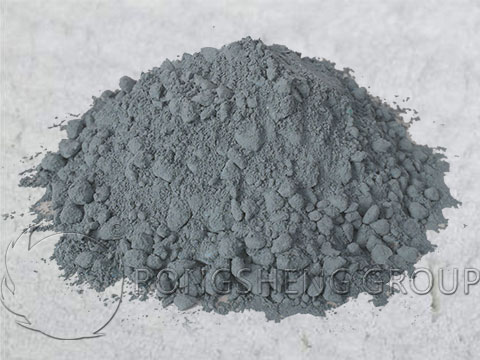
Micro-Expansion Wear-Resistant Plastic Refractory
Wear-Resistant Plastic Refractory

Free Quote

    Leave Your Requirements

    Your Name (required)

    Your Email (required)

    Your Phone


    Your Requirements(required)

    Wear-Resistant Refractory Plastic

    Abrasion-resistant refractory plastics are made from high-alumina bauxite clinker, corundum, mullite, and silicon carbide as aggregates. They possess excellent wear resistance, strong adhesion, and a high service temperature. Formulated with different binders and additives, they are refractory materials with high strength and wear resistance. They offer advantages such as easy construction, good plasticity, and excellent wear resistance. The applied wear-resistant layer has high strength and wear resistance, fully meeting the performance requirements of wear-resistant refractory materials for boilers.

    • 1) Application Method: The materials and binder are mixed evenly with phosphoric acid before use. Construction is typically carried out using a ramming process.
    • 2) Applicable Areas
      • Suitable for construction in thin-thickness areas such as furnace water-cooled walls, mainly used in the dense phase zone of the furnace and in steam-cooled and water-cooled cyclone separators. In this area, the wear-resistant refractory material is designed as a single-layer rammed structure, fixed with wear-resistant pins, and its design thickness is relatively thin, directly applied to the construction surface.
      • In the repair of circulating fluidized bed cyclone separators, its superior bonding properties allow for the repair of any irregular wear areas without the need for steel templates or molds. Ignition can be performed immediately after construction, requiring no special curing, thus shortening the construction cycle and saving costs.
    • 3) Storage method. Avoid open-air storage and direct sunlight. Store in a cool, damp place in summer and protect from freezing in winter.

    Corundum Wear-Resistant Refractory Plastic

    This material belongs to the field of high-temperature wear-resistant refractory materials. The raw materials consist of high-alumina homogeneous material, alumina micropowder, silica micropowder, clay, phosphoric acid, aluminum dihydrogen phosphate solution, and pure calcium aluminate cement. Its key feature is the use of low-water-absorption, low-porosity, and highly uniform synthetic homogeneous materials to replace traditional high-water-absorption, high-porosity, and poorly uniform sintered bauxite clinker natural raw materials or corundum composite raw material systems, producing a homogeneous, high-strength, wear-resistant corundum plastic.

    • 1) Application Method: This material is applied using a tamping process, suitable for thin-thickness applications such as furnace water-cooled walls. The resulting wear-resistant layer exhibits high strength and wear resistance. Unlike castables, this plastic does not require molds and can be applied directly using a smearing and tamping method. The refractory plastic material has good workability, high strength, and good wear resistance, resulting in optimal performance in the field. It helps extend the service life of furnace linings and improve the utilization efficiency of high-temperature kilns.
    • 2) Applicable Areas. It is mainly used in the dense phase zone of the furnace and in steam-cooled/water-cooled/insulated cyclone separators. The wear-resistant refractory material in this area is designed as a single-layer rammed structure and fixed with wear-resistant pins. Its thickness varies, generally 40-60mm (steam-cooled/water-cooled) and 320-350mm (insulated), and it can be directly laid on the construction surface.
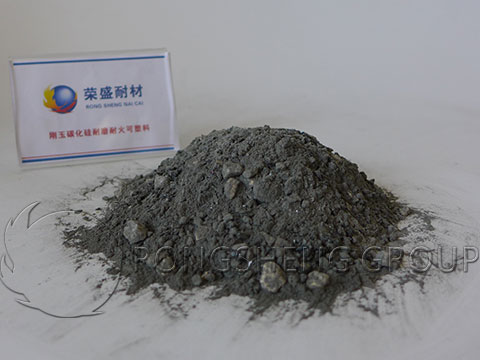
    Corundum Silicon Carbide Wear Resistant Refractory Plastic
    Corundum Silicon Carbide Wear-Resistant Refractory Plastic

    Free Quote

      Leave Your Requirements

      Your Name (required)

      Your Email (required)

      Your Phone


      Your Requirements(required)

      Silicon Carbide Corundum Wear-Resistant Refractory Plastic

      Silicon carbide corundum wear-resistant refractory plastic is a high-grade refractory material. It possesses excellent wear resistance, strong adhesion, and a high service temperature. It is also renowned for its simple construction process, short construction period, and the superior characteristic of not requiring furnace drying after construction. In practice, its service life is significantly longer than other wear-resistant refractory materials, and it is widely used in industries such as power, metallurgy, steel, and ceramics.

      • 1) Application Method: This material is applied using a smearing and tamping method. Before application, rigid anchor pins should be fixed to the required locations, with a mesh spacing of approximately 120-150mm (maximum not exceeding 200mm). During application, the plastic is laid evenly on the required areas. The thickness of the smear can be determined according to the design requirements of different furnace types.
      • 2) Applicable Areas: Silicon carbide wear-resistant refractory plastic can be widely used in cyclone separators, thermal radiation materials, and other applications where refractory materials are used. It possesses superior adhesive properties, allowing for easy application and application to any irregular, worn areas, significantly reducing wear. No steel templates or molds are required; it can be ignited immediately after application without special curing, thus shortening the construction cycle and saving costs.
      • 3) Storage Method. Avoid open-air storage and direct sunlight. In summer, store in a cool, damp place; in winter, protect from freezing. The shelf life of the plastic is generally one year, and the accelerator should be replaced after 4-6 months of unused use (if used after one year of storage, the material must be re-cured).

      High-Strength Wear-Resistant Refractory Plastics

      Rongsheng’s high-strength wear-resistant refractory plastics belong to the high-strength wear-resistant series of refractory plastics. Their materials include high-alumina, corundum, silicon carbide, chromium, and zircon.

      High-strength wear-resistant refractory plastics possess strong plasticity and wear resistance. They can be tamped into any shape using the tamping method, making them a quick-repairing material for kiln linings.

      High-strength wear-resistant refractory plastics are refractory plastics composed of the above-mentioned materials as the main raw materials, with the addition of binders and additives (shrinkage inhibitors, preservatives, and antifreeze agents).

      Commonly used castables include: corundum wear-resistant refractory castables, wear-resistant refractory plastics, non-stick alumina castables, low-cement refractory castables, adjustable-mouth castables, high-strength impermeable low-cement castables, lightweight refractory insulating castables, and steel fiber refractory castables.

      Applications of High-Strength Wear-Resistant Plastics:

      1. In the power generation industry: coal unloading trenches, coal hoppers, coal storage bins, dry coal grids, tippers, slag removers, water treatment, etc.
      2. In the chemical industry: corrosion-resistant flooring, pump foundations, etc.
      3. In the coal industry: wear-resistant linings for grinding bins, medium tanks, scraper conveyors, bucket elevators, chutes, underscreen hoppers, etc.; in the steel industry: blast furnace mixing bins, sintering bins, feeders, pelletizing machines, etc.
        Get Excellent Service

        Please Leave Your Inquiry for Rongsheng Refractory Castable & Cement! We Will Reply You In 12 Hours!

        Your Name (required)

        Your Email (required)

        Your Phone

        Your Requirements(required)

        Moisturizing and High-Temperature Properties of Refractory Plastics

        Plastic is a refractory material that was developed and applied earlier and is mainly used in heating furnaces, electric furnace tops, and other parts. Due to its shortcomings such as short storage time and poor fire resistance, its application range is limited. However, this refractory material has some irreplaceable advantages, such as the high-temperature strength of the furnace body constructed with plastic, excellent thermal shock resistance, low thermal conductivity, and flexible construction methods.

        Selection of Refractory Plastic Aggregates

        Refractory plastics should have excellent plasticity, moisture retention, and high-temperature performance. To meet these conditions, it is very important to select suitable raw materials. The raw materials should have good volume stability. During the heating process, they can be well-sintered and reacted with binders such as clay. Aggregates should have appropriate particle size and grading. Generally, the critical particle size of refractory plastic aggregates is less than 10 mm, the aggregate content is 55% to 65%, and the powder content is 35% to 45%. Through strength tests and moisture retention tests, it was found that although the plastic produced with grade 3 high aluminum and grade 2 high aluminum as the main raw materials has a higher strength after burning, the moisture retention of the material is poor. Therefore, it is determined to use special grade high aluminum alumina as the main raw material, and it is required to be sintered densely and have a low impurity content. In order to improve the moisture retention performance, the iron oxide content in the material should be strictly controlled.

        Phosphate Bonded High Alumina Refractory Plastics
        High Alumina Refractory Plastics

        Free Quote

          Leave Your Requirements

          Your Name (required)

          Your Email (required)

          Your Phone


          Your Requirements(required)

          Effect of Clay and Powder Addition on the Performance of Refractory Plastic

          Binding clay is added to plastic, which mainly plays a bonding role and improves its plasticity and sintering performance. The particle size of clay should generally be less than 200 mesh. Its dosage should be minimized while ensuring the plasticity and bonding ability of plastic. If too much is added, the linear shrinkage of plastic will increase after high-temperature firing, the load softening temperature will decrease, and the high-temperature creep will increase. If the amount added is too little, the plasticity of the material cannot be guaranteed. Through experiments, it is determined that the amount of clay added is 5% to 15%. In order to reduce the linear change of plastic after firing, an appropriate amount of kyanite is added. Since kyanite produces volume expansion at high temperatures, it can offset part of the shrinkage of plastic. Its fineness is 150 mesh, and the amount added is controlled at about 5%. In order to improve the plasticity and thermal shock resistance of plastic and further reduce the impurity content in the raw materials, alumina powder, and silicon powder are added. This can not only improve the construction performance of the material but also increase the medium and high-temperature strength of the product. The total amount of the two is generally controlled at 6% to 12%, which is more reasonable.

          Through experiments, it is found that when the plastic index is around 14%, the plastic is relatively hard and the construction performance is poor. When the plastic index is around 26%, the plastic feels softer and the construction is easier. In order to facilitate construction and meet the requirements of other performance indicators. Through repeated experiments, it is confirmed that the plastic index of the plastic is about 28%.

          Selection of Fire-Resistant Plastic Binder

          In order to make plastic have higher strength and excellent moisture retention performance, various binders were tested, such as phosphoric acid, water glass and aluminum sulfate. Through experiments, it can be proved that plastic with phosphoric acid as binder has higher strength index. However, due to the strong acidity of phosphoric acid and the high iron oxide content in the raw material, phosphoric acid can easily react chemically with iron oxide, which makes the moisture retention performance of plastic worse. Using aluminum sulfate as a binder, plastic has a longer moisture retention performance, but the strength index of plastic cannot meet the use requirements. Using water glass as a binder, the moisture retention performance of the material is better in the short term, but after a long storage time, the construction performance of plastic deteriorates. In addition, when the plastic combined with water glass is baked, the hard shell produced on the surface will have an adverse effect on the strength of the plastic construction body. Through repeated experiments, it was determined that the two binders of phosphoric acid and aluminum sulfate were used in combination, so that the moisture retention performance and strength index of the plastic can meet the use requirements.

          High-Strength Aluminum Phosphate Bonded Refractory Plastics
          High-Strength Aluminum Phosphate Bonded Refractory Plastics

          Free Quote

            Leave Your Requirements

            Your Name (required)

            Your Email (required)

            Your Phone


            Your Requirements(required)

            Factors Affecting Moisture Retention Performance

            Influence of aggregate types

            Through continuous moisture retention experiments, it was found that the moisture retention performance of plastics with high-aluminum from special downdraft kilns as aggregates is significantly better than that of plastics with other low-grade aggregates. This is due to the dense sintering of special-grade aggregates and the low water absorption rate of particles.

            Influence of binder types

            Binders have the greatest impact on the moisture retention performance of plastics and also play a key role in other properties. If improperly selected, plastics will not meet the requirements of use.

            Through experimental research on the moisture retention performance and compressive strength performance of the test blocks, as well as comprehensive considerations such as raw material costs, phosphoric acid, and aluminum sulfate were finally selected as composite binders. This can not only meet the moisture retention performance requirements of plastics but also meet the requirements of medium and high-temperature strength.

            Effect of admixture types

            Experiments show that adding organic acids (such as oxalic acid) and dextrin and other admixtures can prevent or delay the reaction between the binder and the refractory material, and play a role in extending the moisture retention of plastic. Some admixtures are oily and can effectively reduce the agglomeration of plastic, which mainly extends the moisture retention of the material from a physical aspect. Oily moisturizers and main binders such as phosphoric acid are not miscible but can reduce the chance of chemical reactions between phosphoric acid and raw materials, making the moisturizing effect better.

            When used in furnaces such as heating furnaces and annealing furnaces, plastic has certain advantages over castables. It does not require on-site mixing equipment and can be directly constructed. It has a large viscosity and does not flow. It is easier to combine with the old lining during repair, and local repairs can be performed without templates. Because it has a low water content, the requirements for baking conditions are not very strict.

            Conclusion

            • (1) Using high-grade downdraft kiln high-alumina bauxite as the main raw material can significantly improve the moisture retention performance of plastics.
            • (2) Using phosphoric acid and sulfuric acid in a composite form, and adding an appropriate amount of additives, plastics with relatively good moisture retention and strength indicators can be produced. The effect of using a single combination is not ideal.
            • (3) Select high-grade high-alumina bauxite with dense sintering and low impurity content to minimize the iron oxide content in the material. In addition, adding an appropriate amount of moisturizing agent can significantly extend the moisture retention period of plastics.

            Rongsheng amorphous refractory castable manufacturer can provide high-quality amorphous refractory lining materials for high-temperature industrial furnaces. If you need to purchase refractory plastics to extend the service life of refractory furnace lining materials. Please contact Rongsheng for free solutions for high-temperature industrial furnace linings.

              Get Excellent Service

              Please Leave Your Inquiry for Rongsheng Refractory Castable & Cement! We Will Reply You In 12 Hours!

              Your Name (required)

              Your Email (required)

              Your Phone

              Your Requirements(required)