
It is well-established that adding silicon carbide to refractory castables enhances their strength. However, the specific impact on the castable’s performance varies depending on the proportion of silicon carbide added.
Refractory castables are produced without undergoing high-temperature firing. Their increasing usage and broad range of applications stem from their short production cycles and the convenience and speed with which they can be installed. Furthermore, they are particularly effective in areas of industrial furnace linings that incorporate iron components or require specialized treatment. Rongsheng Refractory, a manufacturer of such castables, continuously refines its production processes through ongoing experimentation based on real-world application. This ensures that their refractory castables provide high-performance, long-lasting monolithic linings for high-temperature industrial furnaces.
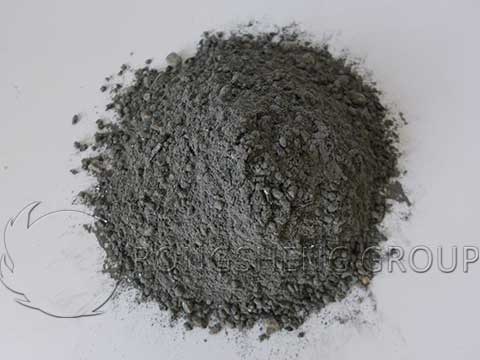
Addition of Silicon Carbide to Refractory Castables
The effect of adding silicon carbide to refractory castables. Adding an excessive amount of silicon carbide (SiC) to refractory castables can compromise their strength at low to medium temperatures; it may also trigger premature mullitization and lead to a relative decrease in porosity. Conversely, at high temperatures, the compressive strength of such castables is actually enhanced.
If the silicon carbide content is too low—or if it is omitted entirely—the strength of the castable drops by 25%. In essence, modern silicon carbide-based castables are simply high-alumina castables reinforced with silicon carbide; without this additive, they retain only the baseline strength of standard high-alumina castables.
If the silicon carbide content is insufficient, the material fails to gain the intended improvements in wear resistance and compressive strength, effectively reverting to a standard high-alumina castable. However, in furnace linings subject to severe erosion, the addition of silicon carbide is essential to modify the material’s properties—specifically by enhancing thermal shock stability and wear resistance—thereby extending the service life of the lining.
Naturally, adding too much silicon carbide can trigger unwanted reactions with silicon dioxide (silica), while adding too little renders it ineffective. How, then, is the balance achieved? Generally, in cases where furnace erosion and mechanical abrasion are not extreme, incorporating 6% silicon carbide into the refractory castable provides an optimal balance, ensuring both adequate strength in the semi-finished state and superior performance in high-temperature operating zones.
Benefits of Adding Silicon Carbide to Refractory Castables
Refractory castables exhibit varying properties depending on their manufacturing processes and matrix compositions. Silicon carbide (SiC) possesses excellent wear resistance; incorporating it into refractory castables enhances their abrasion resistance, lowers their wear coefficient, and can extend their service life by one to two times.
Due to its high thermal conductivity and low coefficient of thermal expansion, silicon carbide—when added in appropriate proportions—improves the thermal shock resistance of refractory castables. This is particularly evident in silicon carbide products bonded with silicon nitride, which demonstrate a two-fold increase in thermal shock resistance compared to versions without silicon carbide, while also preventing catastrophic, sudden structural failure.
Refractory castables with high silicon carbide content exhibit high thermal conductivity. Generally, silicate-bonded silicon carbide materials have relatively lower thermal conductivity, whereas those bonded with silicon oxynitride or silicon nitride exhibit higher thermal conductivity.
To ensure the oxidation resistance of silicon carbide, metallic silicon powder must be added to inhibit the oxidation of the silicon carbide itself. The oxidation resistance of silicon carbide-containing refractory castables varies significantly depending on the type of bonding matrix used. Silicon nitride-bonded silicon carbide castables or refractory bricks exhibit lower oxidation resistance; their matrix features an interwoven fibrous structure, which results in higher gas permeability and provides less protection to the silicon carbide particles. In contrast, in silicate-bonded or silicon oxynitride-bonded silicon carbide products, the silicon carbide particles are encapsulated by a continuous matrix, which provides superior resistance to oxidation.
Silicon carbide retains high strength and high wear resistance even at elevated temperatures. When incorporated into refractory castables in specific proportions, it imparts excellent chemical stability, rendering the material resistant to corrosion by acidic or alkaline solutions. Silicon carbide exhibits a large wetting angle with molten metals and slags; compared to oxide-based refractory castables, it offers superior resistance to erosion by the solids, liquids, and gases present in various furnace linings.
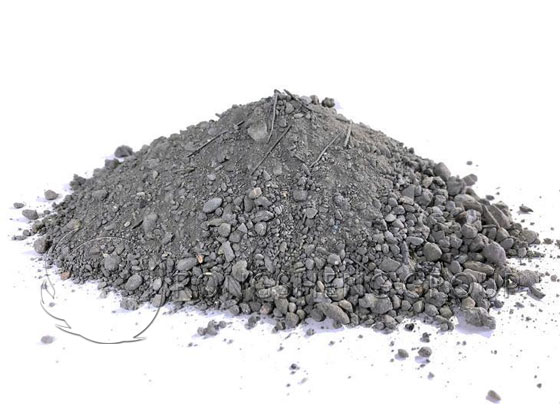
The Influence of Silicon Carbide Content on High-Strength, Wear-Resistant Refractory Castables
High-strength, wear-resistant refractory castables are a type of wear-resistant refractory concrete composed of materials such as corundum and silicon carbide, bonded together using a high-strength, low-cement binder system.
Corundum is a trigonal mineral with a melting point as high as 2050°C and a coefficient of thermal expansion of 8.6×10⁻⁶ K⁻¹; it possesses moderate-to-low thermal shock resistance. With a hardness of 9, corundum is surpassed only by diamond and a few other synthetic, ultra-hard minerals. Products made from corundum exhibit exceptional strength—for instance, alumina ceramics can achieve a compressive strength of up to 2000 MPa and a flexural strength exceeding 250 MPa (with a hot flexural strength of 150 MPa at 1000°C). Consequently, the corundum incorporated into these castables provides significant resistance to wear.
Silicon carbide is widely utilized in abrasives, heating elements, structural ceramics, and refractory materials due to its high hardness, electrical conductivity, high-temperature resistance, and great strength. It has a Mohs hardness of 9.5. Black silicon carbide, which has a Vickers hardness (HV) of 30,380–32,340 MPa, is brittle and sharp; it is used for grinding gray cast iron, non-ferrous metals, non-metallic materials, as well as silicate-based substances like stone, ceramics, and glass. Green silicon carbide, with an HV of 31,360–33,320 MPa, offers strong cutting capability and excellent self-sharpening properties, though it is more brittle; it is typically used for grinding hard, brittle materials such as cemented carbides and optical glass. Thus, the silicon carbide within these castables contributes significantly to their wear resistance.
The primary challenge in developing high-strength, wear-resistant castables lies in mitigating the negative effects associated with silicon carbide. While silicon carbide particles themselves offer excellent wear resistance, their inclusion also helps enhance the castable’s resistance to erosion and thermal shock. However, silicon carbide crystals have a low ionic bond component, making them relatively difficult to be wetted by polar substances.
The addition of silicon carbide (SiC) increases the water demand of refractory castables and reduces their strength. As the SiC content increases, the water demand of the refractory castable rises from 6.0% to 6.4%. Without additional measures, the strength of the castable will be adversely affected.
The influence of SiC content on the strength and wear resistance of the castable is as follows: Increasing the SiC content from 1% to 5% enhances the strength of the refractory castable after heat treatment at temperatures ranging from 110°C to 1500°C. However, increasing the SiC content from 5% to 9% negatively impacts the strength of the castable after heat treatment at 1100°C. Following treatment at 110°C, the addition of SiC yields almost no improvement in the wear resistance of the castable. After treatment at 1100°C, wear resistance shows a slight improvement with an SiC content of 1%–5%, but it deteriorates when the SiC content is between 5% and 9%.
Therefore, to fully leverage the properties of corundum and silicon carbide raw materials and to enhance the wear resistance of refractory castables, it is essential to carefully select and proportion cements, ultrafine powders, and chemical admixtures. This approach improves the strength of the castable across various treatment temperatures and optimizes linear dimensional stability, resulting in a robust and reliable bond. This prevents the dislodgement of corundum and silicon carbide particles and stops abrasive particles from penetrating the castable—which would otherwise damage its internal structure during relative motion—thereby ensuring excellent wear resistance. This is characteristic of ultra-high-strength, wear-resistant castables.
This wear-resistant castable has demonstrated excellent performance in high-wear areas—such as tertiary air ducts and preheater-based power generation systems—within several modern dry-process cement kilns. It offers a service life of over three years, significantly exceeding the 0.5 to 1.0-year lifespan typical of other materials.