High-purity nitrogen is a crucial protective gas required for cold-rolled sheet, hot-dip galvanizing, and silicon steel production lines. The purity of nitrogen significantly impacts product quality. Excessive oxygen content leads to surface oxidation of steel sheets, causing surface elements to react with oxygen and affecting steel quality, resulting in problems such as bare spots in galvanized sheets. Cryogenic air separation units produce nitrogen as a byproduct; due to its relatively low purity and unstable oxygen content, this nitrogen is often referred to as “dirty nitrogen.” Chinese steel mills possess abundant “dirty nitrogen” resources, but due to purity and stability issues, this nitrogen cannot be directly used in cold-rolling production and must be purified before use. Even imported air separation units experience fluctuations in gas production and potential cross-contamination of instrument air. Therefore, imported production lines typically employ terminal purification devices to ensure nitrogen purity and stability. Currently, these nitrogen purification devices commonly use ceramic fiber as an insulation material. However, ceramic fiber has drawbacks, including a short lifespan requiring replacement every two years, difficulty in installation as required, inability to achieve a 1/2 compression ratio, significant environmental hazards, and health risks to construction workers.
Lightweight Insulating Castable Refractories for Nitrogen Purification Units
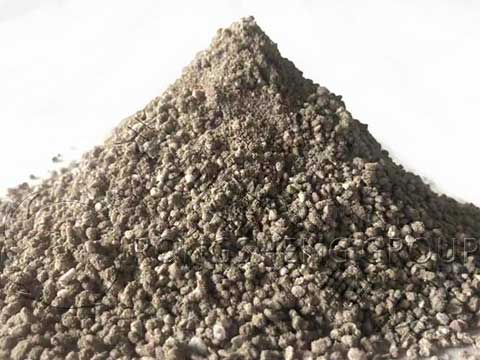
Vermiculite is a group of hydrous mica (usually biotite or phlogopite) formed through alteration and weathering in hot aqueous solutions. It is a secondary metamorphic mineral containing magnesium and iron silicates. When raw vermiculite ore or beneficiated ore is heated to above 300℃, it becomes a highly efficient insulating material. The resulting expanded vermiculite possesses properties such as low density, thermal insulation, sound insulation, earthquake resistance, fire resistance, and freeze resistance. Furthermore, since vermiculite is environmentally friendly, it is also an important environmentally friendly material. To address the drawbacks of using ceramic fibers as insulation materials, this paper develops a lightweight insulating refractory castable refractories using vermiculite and calcium aluminate cement as the main raw materials, based on the operating conditions and requirements of nitrogen purification units, aiming to meet the insulation material requirements of nitrogen purification units.
Based on the experimental results, the developed lightweight insulating castable was used as an external insulation material in a field test on two nitrogen purification units at the gas plant of a steel plate company. The results showed that the lightweight insulating castable performed well as the external insulation material for the nitrogen purification units, with no damage observed. Furthermore, the use of this lightweight insulating castable reduced the external temperature of the nitrogen purification units. In actual use, the external temperature remained below 40℃, achieving the goals of reducing heat loss from thermal equipment, improving thermal efficiency, reducing energy consumption, and achieving energy conservation and emission reduction.
In conclusion, the lightweight insulating castable can replace ceramic fiber as the external insulation material for nitrogen purification units, demonstrating excellent performance. It reduces the external temperature of the nitrogen purification units, achieving the goals of reducing heat loss from thermal equipment, improving thermal efficiency, reducing energy consumption, and achieving energy conservation and emission reduction.
Lightweight Insulating Castable
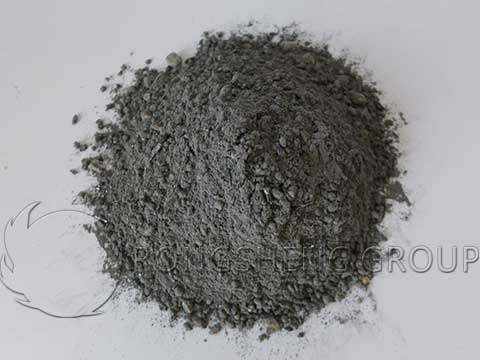
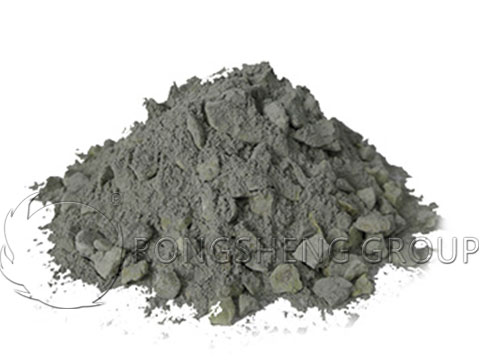
Lightweight insulating castable is an unshaped material with lightweight aggregates and a specific binder as its core, possessing both fire resistance and high-efficiency thermal insulation properties. It is also known as lightweight insulating castable. Aggregates, depending on the service temperature, can include expanded vermiculite, expanded perlite, ceramsite, porous clay particles, corundum, high-alumina mullite, etc. Binders include ordinary silicate cement, alum cement, calcium aluminate cement, dialuminate phosphate, silica sol, alumina sol, etc. It is usually supplied in dry powder or slurry form, and is mixed with water or liquid binder on-site before being applied by pouring, vibration, tamping, etc.
Characteristics of Lightweight Insulating Castable: Lightweight insulation with low bulk density and low thermal conductivity, effectively reducing heat loss. High strength, with certain flexural and compressive strength. Good corrosion resistance; some products are resistant to acidic gas corrosion and can be used in harsh chemical environments. Construction is convenient; it can be cast into various shapes and made into precast blocks as needed, making construction relatively easy. It is suitable for kiln insulation layers, reducing kiln load and improving thermal efficiency, such as kilns in the metallurgical and building materials industries, and acid-resistant pools and tanks in the petroleum, chemical, and non-ferrous metallurgical industries. It is also an ideal material for high-temperature flue ducts and air duct linings in chimneys, effectively improving the airtightness and corrosion resistance of the lining.
Optimization of Low Thermal Conductivity Castable Technology
Low thermal conductivity castables are not simply an extension of the ordinary “lightweight” concept, but rather achieve “three lows and one high” simultaneously under high-temperature service conditions—low bulk density, low thermal conductivity, low linear shrinkage rate, and high refractory strength. This performance combination breaks the traditional rule of “temperature increase → simultaneous increase in bulk density,” enabling simultaneous reduction of equipment weight and strengthening of furnace lining insulation, providing a material basis for further energy saving and consumption reduction in industrial kilns.
Performance Characteristics of Low Thermal Conductivity Castables
Lightweight and High Strength: At the same service temperature level, the bulk density can be lower than that of conventional lightweight insulating castables, while the compressive strength remains at the same or higher level.
Stable Thermal Conductivity: In the 1000 ℃ high-temperature range, the thermal conductivity remains ≤0.35 W·(m·K)⁻¹, significantly reducing heat loss from the furnace wall. 3. Excellent integrity and high plasticity: The material has a uniform porous network structure, allowing for on-site casting, tamping, spraying, or prefabrication. Complex irregular furnace linings can be formed in one piece, and subsequent local repairs do not require furnace shutdown for cooling.
Thermal shock resistance and spalling resistance: The introduction of composite micro-powder and fiber synergistic toughening ensures no through-cracks after more than 50 rapid cooling and heating cycles, extending service life by 1.5 to 2 times.
Raw Materials and Processes for Low Thermal Conductivity Castables
Lightweight Aggregate Selection: Low-iron, high-alumina porous homogeneous aggregates are used, requiring a bulk density ≤1.2 g·cm⁻³ and a compressive strength ≥8 MPa, ensuring “lightweight yet not loose” from the source.
Composite Additives: Expandable minerals are introduced to offset high-temperature sintering shrinkage; reducing water addition while increasing filling rate.
Particle Size Distribution Redesign: The upper limit of critical particle size is relaxed to enhance the aggregate “skeleton” effect, balancing construction flowability and surface smoothness.
Standardized Testing Methods: A “dual-indicator” admission system is established to address regional differences in aggregate testing—measuring both the intrinsic properties of the lightweight aggregate and its high-temperature linear change and thermal conductivity after coupling with additives, ensuring batch stability.
Construction Advantages of Low Thermal Conductivity Castables
After mixing with water, the material has a flow value ≥180 mm, self-leveling with vibration, and can be poured within 30 minutes; initial setting time is 2.5 hours, final setting time is 4 hours, and the baking curve is shortened by 20% compared to traditional materials; no harmful gases are emitted, and there is no corrosion to the furnace shell steel structure.
Energy Saving and Economic Benefits
Field measurements in metallurgical heating furnaces, mechanical heat treatment furnaces, electric circulating fluidized bed furnaces, chemical cracking furnaces, and petrochemical reforming furnaces show that: the average temperature of the furnace lining outer wall decreases by 40-60℃, and heat loss is reduced by 20%-25%. The furnace heating rate increases by 15%, the production cycle is shortened, and the unit consumption of gas or electricity decreases by 8%-12%. Furnace temperature uniformity is improved, the product qualification rate increases by 2-3 percentage points, and the material price difference can be recovered within one year of comprehensive operating costs. Industry Application Differences
Petrochemical kilns, due to their harsh operating conditions (large temperature differences, high permeability of light oils), require low thermal conductivity castables with even lower bulk density and higher chemical stability. Corresponding products require high-purity matrices and special sealants, resulting in prices approximately 20%–30% higher than similar materials used in the metallurgical industry. However, their service life can be extended by more than 3 years, and their total life-cycle cost is still superior to ordinary light materials.
With the continuous advancement of raw material purification and composite modification technologies, the application boundaries of low thermal conductivity castables will further expand from traditional kilns to higher temperatures, more complex, and more demanding extreme operating conditions.