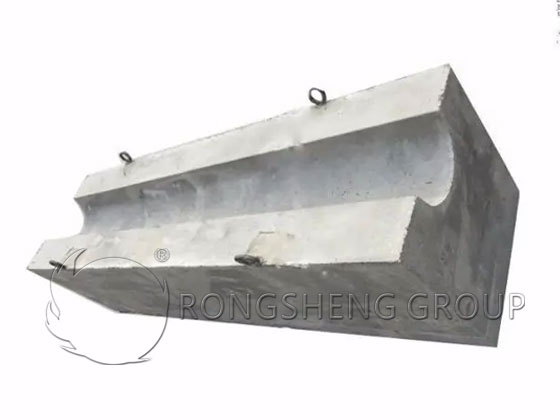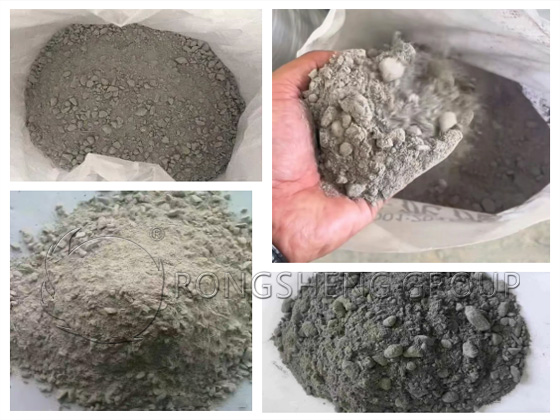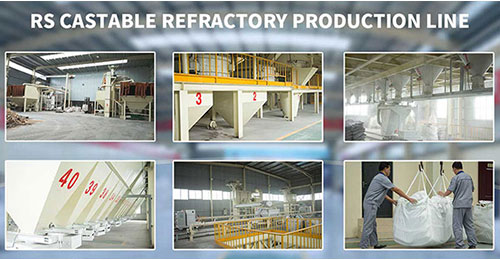
The setting of refractory castables is closely related to the hydration of refractory cement. When a certain proportion of refractory cement is added to a refractory castable, the hydration, setting, and hardening process begins with the raw materials and binder coming into contact with water. First, the refractory cement undergoes a hydration reaction on the surface of the particles. The first step in hydration is the formation of crystal nuclei. As the nuclei enlarge, they adhere to the hydration products. During the curing process, the hydration products grow and agglomerate into particles. Then, the refractory castable begins to set and harden further, eventually reaching the required strength.
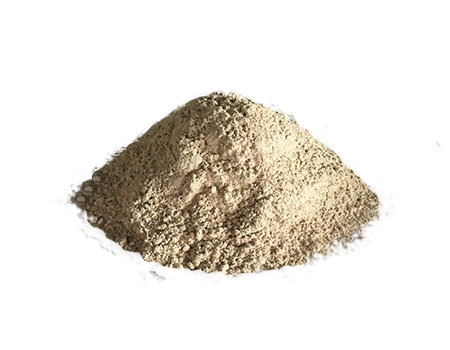
The Hydration Process of Castable Refractory Cement
The water reaction process differs among different grades of refractory cement, and hydration varies with temperature and time. After hydration for a certain period, the free water and crystal water that have not yet participated in the hydration reaction separate out with increasing temperature.
When refractory cement is added to refractory castables, and then a certain proportion of water is added during construction, the refractory cement begins to dissolve. As the refractory cement forms crystal nuclei, cement hydrates precipitate out after nucleation. After a hydration dormancy period and heat release, the hydration of the refractory cement reaches its peak as the temperature rises. This is the setting time of refractory cement hydration. Different refractory cements have different setting times and hydration rates.
During on-site casting of refractory castables, the hydration process has a significant impact on the setting and demolding of the refractory castable. After mixing with water, the refractory castable will initially set within 4 hours, and demolding typically occurs after 24 hours.
The curing process after casting is also crucial. It solidifies only after hydration. However, free water can be drained, while the water of crystallization must be slowly baked at 600℃ to achieve sufficient strength.
Castable Refractory Cement
Castable refractory cement is a type of refractory cement used in the production of refractory castables. It can be used as a binder, additive, and other ingredients. Due to its stable performance and good application results, castable cement is an indispensable refractory raw material.
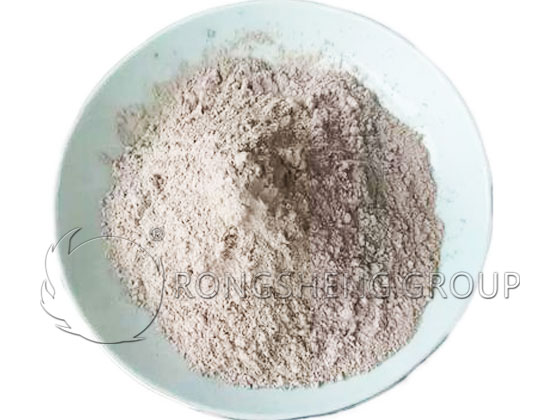
Castable refractory cement is a type of cement with a refractoriness of not less than 1580℃, made from bauxite and lime as raw materials. The raw materials are mixed in a certain proportion to form appropriate amounts of raw meal, which is then sintered to obtain clinker with aluminate as the main component. This clinker is then ground into a fine powder to produce a hydraulic cementitious material with refractory properties. It is a type of refractory clinker that can be directly added to the production of castables. Depending on the raw materials and composition, it can be classified into aluminate refractory cement, low-calcium aluminate refractory cement, calcium-magnesium aluminate cement, and dolomite refractory cement, etc.
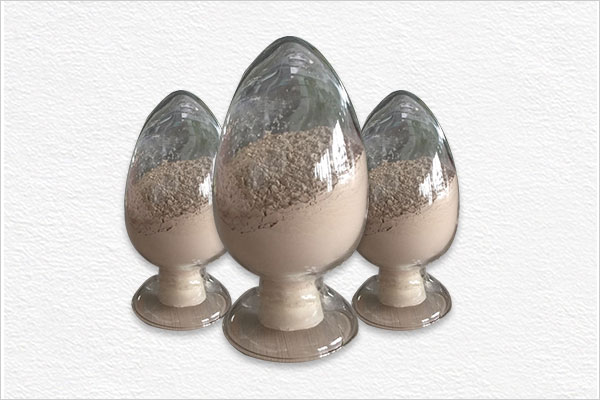
Applications of Castable Refractory Cement
- Refractory cement can be used to bind various refractory aggregates (such as corundum, calcined high-alumina bauxite, etc.) to produce refractory mortar or concrete for use as linings in cement rotary kilns and other industrial kilns.
- It can be mixed with lightweight aggregates to produce insulating and heat-resistant concrete.
- It can be mixed with asbestos to produce asbestos cement products with insulating and heat-resistant properties.
Technical Requirements for Refractory Cement
- Fineness of Refractory Cement: The finer the cement particles, the larger the specific surface area, the faster and more complete the hydration reaction, and the higher the early and later strength. National regulations stipulate that the specific surface area should be greater than 300 square meters per kilogram; otherwise, it is considered unqualified.
- Setting Time of Refractory Cement: To ensure sufficient time for mixing, transportation, molding, and other processes during construction, the initial setting time of the cement should not be too short. After construction, it is desirable for the cement to harden and develop strength as quickly as possible, so the final setting time should not be too long. The initial setting time of refractory cement shall not be earlier than 45 minutes, and the final setting time shall not be later than 390 minutes.
- Volume stability of refractory cement: The uniformity of volume change of cement paste during the setting and hardening process is called the volume stability of cement. If the volume change is uneven, i.e., the volume stability is poor, warping and cracking are likely to occur, reducing project quality and even causing accidents.
Precautions for Using Refractory Cement
Refractory castable cement, when used, is mixed with an appropriate amount of water to form a paste. It hardens in air or, even better, in water, and effectively binds other aggregates and powders in the refractory castable together.
Refractory cement is characterized by rapid hardening, high bond strength, strong plasticity, and convenient construction. Unlike ordinary cement, refractory cement acts as a binder in castables at high temperatures, rapidly hardening and exhibiting excellent bonding performance, thus improving the high-temperature performance of refractory castables. While refractory cement has a wide range of applications, its use in the refractory materials industry is primarily as a binder in the production of refractory castables.
Construction of Castables of Different Grades
- Ordinary cement-bonded castables have a relatively high tolerance for construction errors, but their high-temperature performance and erosion resistance are limited.
- Low-cement/ultra-low-cement castables are highly sensitive to water addition and vibration. Excessive water or segregation significantly reduces their high-temperature strength and thermal shock resistance.
- Cement-free/sol-based castables rely heavily on strict construction and kiln drying procedures, making them more suitable for skilled teams and high-end projects.