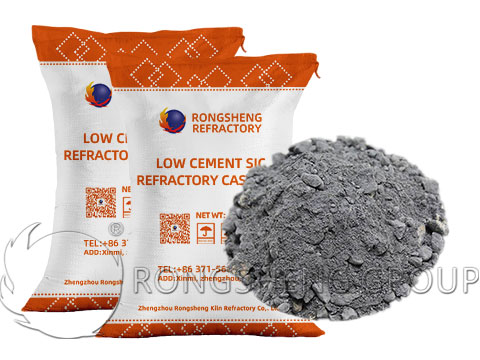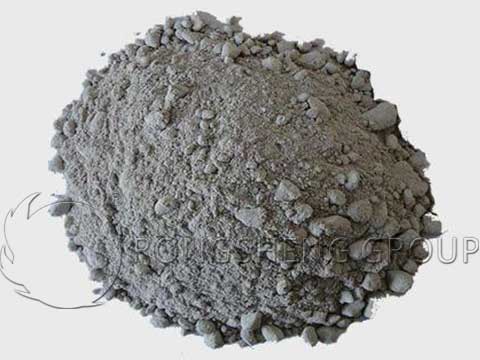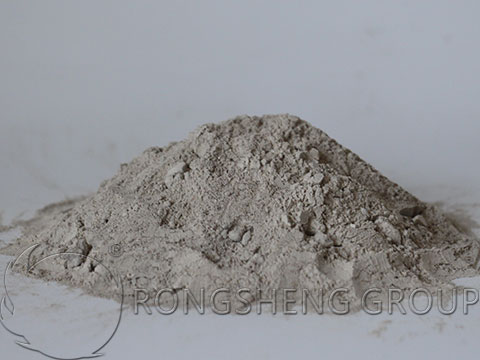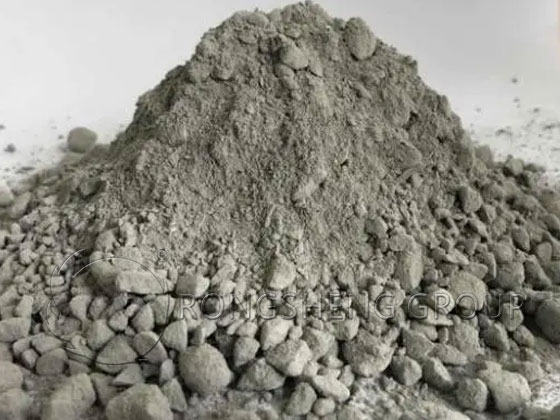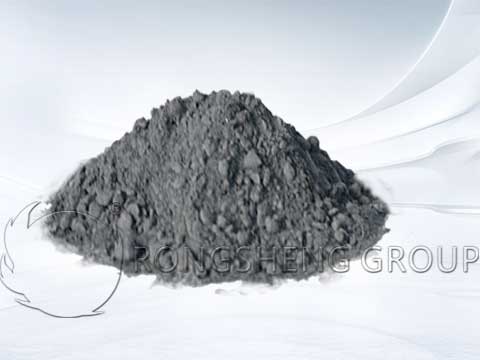
In the glass industry, the selection of refractory materials for glass melting furnaces is a critical factor in determining the service life of the furnace, and it is a subject that receives widespread attention. Ramming mixes—which are extensively utilized for the furnace hearth—represent one such material. As a hearth lining, ramming mixes offer distinct advantages: strong resistance to slag corrosion, excellent structural integrity, and minimal shrinkage. By eliminating the presence of brick joints, they effectively prevent the leakage of molten glass; furthermore, ramming mixes are easy to install, cost-effective, and highly adaptable.
Zircon Sand Ramming Mix
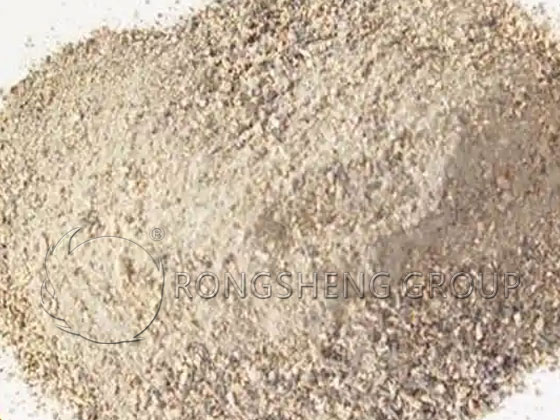
Ramming mix fundamentally consists of three components: base material, sintering aid, and binder. The base material constitutes the primary component of the ramming mix; it forms the refractory crystalline matrix and determines the material’s key properties. Typically accounting for approximately 90% of the mix, it is often selected from high-quality refractory materials such as zircon sand, or sintered or electrofused zircon-corundum grog. The primary function of the sintering aid is to facilitate high-temperature sintering of the material and enhance the ramming mix’s high-temperature strength; plastic clay is frequently employed for this purpose. The binder serves primarily to render the mixture easily formable and to impart a certain degree of mechanical strength; currently, aluminum dihydrogen phosphate is widely utilized as the binder. Zircon sand ramming mix is a protective lining material widely used for the furnace bottoms of glass melting kilns.
Corrosion Mechanisms and Mineral Phase Analysis of Zircon Sand Ramming Mixes
The causes of corrosion in ramming mixes stem from two primary factors:
- (1) The resistance of the ramming mix material to glass melt corrosion: This requires that the primary crystalline phase of the ramming mix possess excellent resistance to attack by molten glass.
- (2) The surface density of the ramming mix: Surface pores and microcracks constitute a significant factor leading to material degradation. Due to the capillary action of these pores and microcracks, the glass melt infiltrates the interior of the ramming mix, thereby accelerating the corrosion process. Consequently, the entire ramming mix structure is required to exhibit high volume stability and excellent density.
Based on the aforementioned corrosion mechanisms, the following analysis examines the crystalline phase composition of zircon sand ramming mixes and the conditions under which they are produced, with the aim of establishing the performance requirements for such mixes regarding their resistance to glass melt corrosion.
The primary constituent of zircon sand is zircon (ZrSiO4). The theoretical composition of zircon is ≥67.2% ZrO2 and ≥32.8% SiO2; it crystallizes in the tetragonal system and has a true density of 4.6–4.8 g/cm³. Analytical data indicate that zircon exhibits good chemical stability against acids; however, at certain temperatures, it undergoes decomposition upon contact with molten alkali metal oxides, hydroxides, carbonates, and similar substances. In the presence of Na2O, the decomposition of zircon commences as early as 900°C and proceeds rapidly at 1200°C. This decomposition yields baddeleyite (ZrO2) and cristobalite; the resulting baddeleyite manifests as fine agglomerates rather than forming a dense, consolidated structure. The liberated SiO2 reacts with the Na2O and the Al2O3 present in the ramming mix to form a liquid phase, thereby rendering the ramming mix susceptible to corrosion by the glass melt. Therefore, to fundamentally enhance the resistance of the ramming mix to glass melt corrosion, efforts must be made to minimize the proportion of the zircon phase within the material as much as possible. Based on the typical composition of zircon sand ramming mixes (approximately 90% zircon sand, 5% clay, and 5% binder), their chemical composition falls within the baddeleyite phase region of the Al2O3–ZrO2–SiO2 phase diagram. Dense baddeleyite exhibits excellent resistance to corrosion by molten glass; the formulation of zircon ramming mixes is specifically designed to generate this baddeleyite phase, thereby ensuring the material’s corrosion resistance.
For zircon sand-based ramming mixes to develop baddeleyite as their primary crystalline phase during service, specific firing conditions are required. If standard zircon sand is utilized, the sintering temperature must exceed 1550°C; higher temperatures accelerate the formation of the baddeleyite crystalline phase. Typically, sintering at high temperatures—specifically above 1600°C—is mandated. If the firing temperature is too low, the conditions necessary for baddeleyite formation are not met; consequently, the baddeleyite phase will either fail to appear or will form in such negligible quantities that it cannot establish itself as the primary crystalline phase. Furthermore, due to the presence of clay within the ramming mix, sintering during firing may instead result in the formation of a mullite phase; in such cases, the original zircon phase—having not participated in the sintering reaction—remains the dominant crystalline phase. Should such a ramming mix come into contact with molten glass, it will inevitably suffer from the severe corrosion described previously. In practical application, the sintering reactions within the ramming mix are completed during the kiln’s initial heat-up (or “firing-in”) process; therefore, the peak temperature attained during this heat-up phase—as well as the duration for which this temperature is sustained—are critical factors determining whether the baddeleyite primary crystalline phase successfully forms within the ramming mix, directly impacting the material’s ultimate performance in service.
Application of Zircon Sand Ramming Mixes in Glass Furnaces
- 1. Currently, when ramming mixes are utilized, they typically do not come into direct contact with the molten glass; instead, a layer of high-quality refractory bricks—known as paving bricks—is laid over the ramming mix to serve as a protective surface layer with superior corrosion resistance. This method of application effectively reflects a lack of confidence in the corrosion resistance of the ramming mix itself, and it appears to negate the true intended purpose of using a ramming mix. In reality, under this specific application method, the ramming mix serves merely as a sealing and protective barrier. Consequently, some end-users do not place significant emphasis on the careful selection of the ramming mix.
- 2. Observations regarding the performance of ramming mixes covered by paving bricks indicate that, due to the insulating effect of the overlying brick layer, the maximum temperature reached by the ramming mix during the furnace heat-up (firing) process rarely exceeds 1400°C. Based on the preceding analysis, it is evident that zircon sand ramming mixes sintered at this temperature will not develop the desired baddeleyite (monoclinic zirconia) as their primary crystalline phase; consequently, their performance falls far short of the anticipated requirements.
- 3. It is essential to select a high-quality zircon sand ramming mix and formulate its composition specifically to meet the requirements for generating the baddeleyite phase. If the solid-phase reaction temperature requirements of the ramming mix are duly considered during the furnace heat-up process, the paving bricks at the furnace bottom can be eliminated from the furnace design, thereby allowing the ramming mix—now containing the generated baddeleyite primary phase—to come into direct contact with the molten glass. Such a material indeed possesses excellent resistance to corrosion by molten glass; this method constitutes the true, authentic application of a ramming mix. Furthermore, by eliminating the need for paving bricks, furnace construction costs can be significantly reduced.
- 4. Achieving furnace heat-up temperatures exceeding 1600°C is often an unrealistic objective for many glass furnaces; therefore, it becomes necessary to improve the zircon sand ramming mix itself. This can be achieved by incorporating appropriate mineralizers to lower the reaction temperature required for the formation of the baddeleyite primary phase. However, implementing this improvement requires extensive research and development to identify a specific formulation—including the type and quantity of mineralizers—that effectively lowers the desired reaction temperature while simultaneously minimizing the generation of undesirable glassy phases.
Performance Advantages of Zircon Sand Ramming Mixes
- (1) In terms of material composition, zircon sand ramming mixes inherently possess excellent resistance to corrosion by molten glass.
- (2) To ensure that zircon sand ramming mixes deliver optimal performance results, the specific conditions under which they are utilized—namely, the application environment and operational parameters—are often of even greater significance. Typically, the kiln temperature must reach 1600°C for the sintering reaction of the main baddeleyite crystal phase to occur. However, this temperature threshold can be further adjusted and optimized by modifying the material composition.