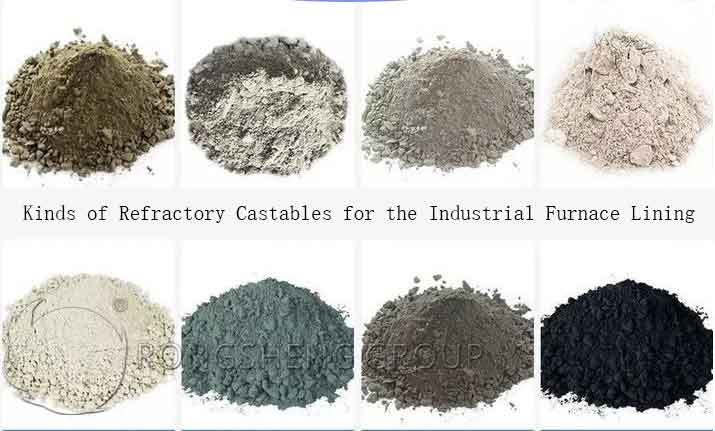
Once the lining (installed structure) made of refractory castable has hardened, it must undergo a drying process to remove internal moisture before it can be put into service. This process involves the characteristics inherent to tabular alumina (tabular corundum). In the case of cement-free, all-alumina (100% Al2O3) refractory castables, the mass decreases over time during the drying process as water is expelled. This results in an increase in the material’s apparent porosity and a rise in its gas permeability.
Theoretically, different particle size distributions (PSDs) might be expected to result in varying levels of porosity. However, experimental results indicate that cement-free, all-alumina (100% Al2O3) refractory castables—prepared with different PSDs but the same water content—exhibit similar apparent porosity after drying. With a water content of 14% (by volume), the apparent porosity in each case is approximately 11.9%. These open pores are formed as moisture is expelled from the refractory castable during the drying process.
Given that the open porosity (apparent porosity) of these refractory castables is similar, differences in their gas permeability are likely primarily attributable to variations in pore distribution, which in turn stem from the distinct particle size distributions of each material.
How can high-performance refractory castables be obtained?
The performance of a castable depends, to a certain extent, on the appropriate selection of drying and heating conditions. High-alumina castables contain significant amounts of moisture—both free water and chemically bound (hydrated) water—which are released between 100°C and 550°C. During the initial heating phase, free water is expelled first, followed by the water released from hydrated phases. To ensure a successful installation, the following conditions must be maintained:
(1) During installation, ensure that the temperature of both the dry mix and the mixing water is approximately 20°C or higher.
(2) After installation, the curing temperature must not be lower than the temperature of the dry mix and mixing water at the time of preparation.
(3) The drying rate has a significant impact on the performance of the castable. Rapid heating causes a sharp rise in internal vapor pressure, which can lead to explosive spalling as the steam attempts to escape. Therefore, metal additives (such as aluminum) and organic fibers can be incorporated into dense castables to facilitate drying. The heating process should follow this schedule:
- Heat from ambient temperature to 110°C at a rate of 15°C/h; hold at 110°C for 1 hour per 25 mm of thickness.
- Heat from 110°C to 300°C at a rate of 15°C/h; hold at 300°C for 1 hour per 25 mm of thickness.
- Heat from 300°C to 550°C at a rate of 25°C/h; hold at 550°C for 1 hour per 15 mm of thickness.
- Heat from 550°C to the final operating temperature at a rate of 75°C/h.
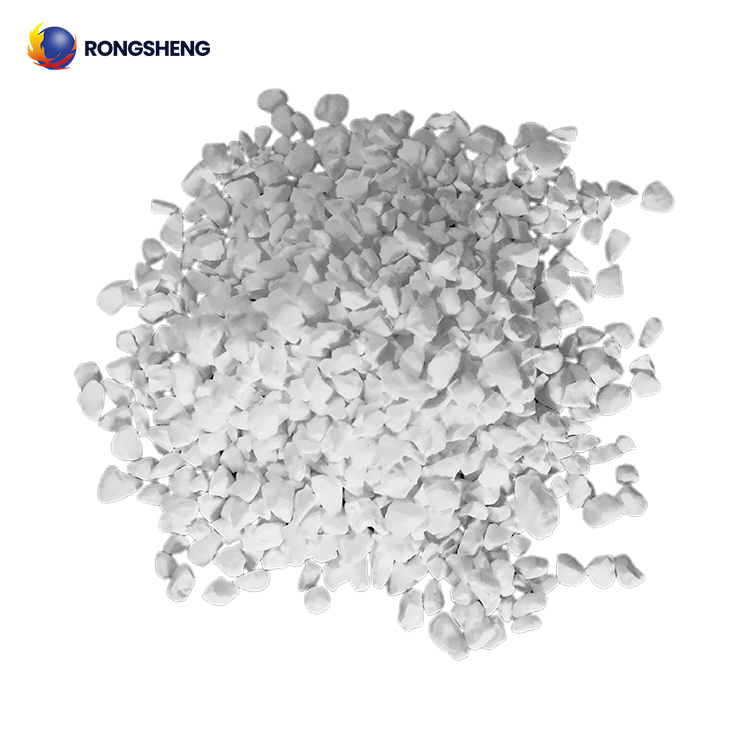
Application of Tabular Alumina as a Refractory Aggregate
Tabular alumina is used as a refractory aggregate in combination with refractory binders, such as high-purity calcium aluminate cement or phosphate-based binders. The inclusion of these binders significantly enhances the erosion resistance and wear resistance of tabular alumina-based refractory materials.
Characteristics of Tabular Alumina
Conventional sintered alumina is typically fired in rotary or tunnel kilns. Due to temperature limitations, small amounts of sintering aids—such as MgO or CaO—are usually added to promote densification. Consequently, conventional sintered alumina exhibits low porosity and a fine, dense crystalline structure, which results in relatively poor thermal shock resistance.
In contrast, tabular alumina is a recrystallized α-Al₂O₃ material, produced through rapid, thorough firing at temperatures exceeding 1900°C without the use of any additives. Its microstructure is characterized by the following features:
- ① It consists of well-developed α-Al₂O₃ crystals.
- ② The α-Al₂O₃ crystals are coarse, with a median grain size typically ranging from 40 to 200 μm; the crystals exhibit a plate-like, two-dimensional morphology and are interlocked with one another.
- ③ The α-Al₂O₃ crystals contain numerous closed, spherical pores (5–15 μm in size), while open porosity is relatively low, generally between 2% and 3%.
- ④ Due to the presence of impurities (approximately 0.16%), β-Al₂O₃ is also present within the structure, located exclusively at the grain boundaries of the α-Al₂O₃ crystals.
These structural characteristics endow tabular alumina with the following physical properties:
- ① A high melting point of approximately 2040°C.
- ② High grain hardness, with a Mohs hardness of 9 and a Knoop hardness of 2000.
- ③ Excellent resistance to chemical erosion; with the exception of hydrofluoric acid and phosphoric acid, most alkalis and mineral acids have no effect on tabular alumina.
- ④ Due to the absence of microcracks and large internal pores, it exhibits high strength. Furthermore, its strength does not decline significantly when subjected to thermal shock, resulting in excellent thermal shock stability.
- ⑤ It possesses high thermal conductivity and high electrical resistivity, ensuring good electrical properties even at high frequencies and high temperatures.
Tabular alumina is typically used as a refractory aggregate, though it can also be incorporated into the matrix as an additive. When combined with other refractory raw materials, it offers several advantages: high refractoriness, high strength under thermal load, low creep, high density, low gas permeability, good thermal shock stability, excellent wear resistance, low thermal shrinkage, and high purity—which minimizes the impact of impurities on the material’s high-temperature performance.
Tabular Alumina Castables
In recent years, tabular alumina has become a high-performance refractory material widely used in the steel, foundry, petrochemical, and ceramic industries. Tabular alumina consists of dense, fully shrunk, sintered α-Al₂O₃, with aggregates formed by grains ranging from 50 to 400 μm. It derives its name from the plate-like (tabular) shape of its grains. As a pure, sintered form of alumina—produced without the addition of agents such as MgO or B₂O₃—it features a well-developed, coarse-grained α-Al₂O₃ crystal structure. Its plate-like crystal morphology, combined with a high proportion of small, closed pores, results in a total porosity comparable to that of fused alumina. It offers high purity, excellent volume stability, and minimal permanent linear change (reheating shrinkage). Refractory products or castables formulated with tabular alumina exhibit superior thermal shock resistance and flexural strength after high-temperature treatment, though they are generally more expensive than other types of alumina.
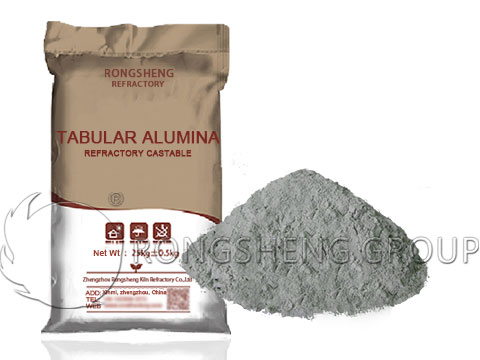
Tabular alumina refractory castables are primarily composed of high-alumina materials, corundum, and mullite, bonded with high-temperature inorganic liquid binders. They are prepared through mixing and extrusion, and are typically applied via ramming. These materials possess good plasticity, exceptional spalling resistance, high refractoriness, high-temperature and mechanical strength, excellent thermal shock stability, good alkali resistance, and high wear resistance. They are primarily used for lining industrial furnaces, including high-wear areas such as the discharge ends (kiln hoods) of rotary kilns, and are particularly well-suited for the kiln inlets of large-scale cement kilns and coal-injection pipes.
Tabular alumina castables utilize a binder system consisting of calcium aluminate cement and silica fume. They are processed by subjecting the material—which serves as an alternative to bauxite-based sprayable refractories—to heat treatment at 1000°C, 1300°C, or 1500°C for a duration of three hours. Tabular alumina castables offer a wide range of superior properties and are utilized across a broad spectrum of industrial applications. Tabular alumina castables possess high flexural and compressive strength, as well as excellent wear resistance. These superior properties render tabular alumina castables indispensable.