Hydration Process of Adding Refractory Cement to Refractory Castable

The setting of refractory castables is closely related to the hydration of refractory cement. When a certain proportion of refractory cement is added to a refractory castable, the hydration, setting, and hardening process begins with the raw materials and binder coming into contact with water. First, the refractory cement undergoes a hydration reaction on the surface of the particles. The first step in hydration is the formation of crystal nuclei. As the nuclei enlarge, they adhere to the hydration products. During the curing process, the hydration products grow and agglomerate into particles. Then, the refractory castable begins to set and harden further, eventually reaching the required strength.
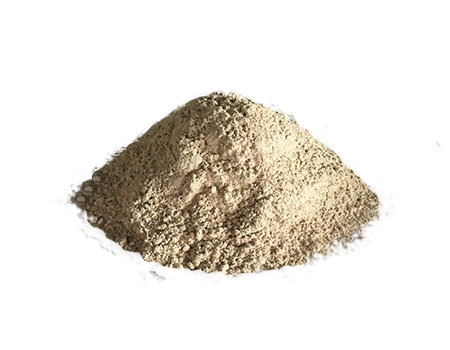
Refractory cement
Refractory Cement to Refractory Castable

Free Quote

    Leave Your Requirements

    Your Name (required)

    Your Email (required)

    Your Phone


    Your Requirements(required)

    The Hydration Process of Castable Refractory Cement

    The water reaction process differs among different grades of refractory cement, and hydration varies with temperature and time. After hydration for a certain period, the free water and crystal water that have not yet participated in the hydration reaction separate out with increasing temperature.

    When refractory cement is added to refractory castables, and then a certain proportion of water is added during construction, the refractory cement begins to dissolve. As the refractory cement forms crystal nuclei, cement hydrates precipitate out after nucleation. After a hydration dormancy period and heat release, the hydration of the refractory cement reaches its peak as the temperature rises. This is the setting time of refractory cement hydration. Different refractory cements have different setting times and hydration rates.

    During on-site casting of refractory castables, the hydration process has a significant impact on the setting and demolding of the refractory castable. After mixing with water, the refractory castable will initially set within 4 hours, and demolding typically occurs after 24 hours.

    The curing process after casting is also crucial. It solidifies only after hydration. However, free water can be drained, while the water of crystallization must be slowly baked at 600℃ to achieve sufficient strength.

    Castable Refractory Cement

    Castable refractory cement is a type of refractory cement used in the production of refractory castables. It can be used as a binder, additive, and other ingredients. Due to its stable performance and good application results, castable cement is an indispensable refractory raw material.

    Castable refractory cement is a type of cement with a refractoriness of not less than 1580℃, made from bauxite and lime as raw materials. The raw materials are mixed in a certain proportion to form appropriate amounts of raw meal, which is then sintered to obtain clinker with aluminate as the main component. This clinker is then ground into a fine powder to produce a hydraulic cementitious material with refractory properties. It is a type of refractory clinker that can be directly added to the production of castables. Depending on the raw materials and composition, it can be classified into aluminate refractory cement, low-calcium aluminate refractory cement, calcium-magnesium aluminate cement, and dolomite refractory cement, etc.
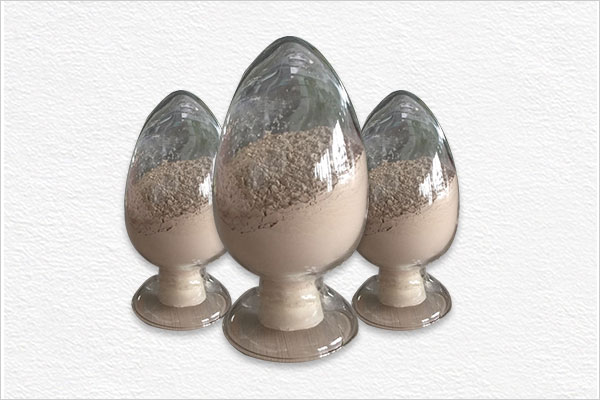
    Applications of Castable Refractory Cement
    Castable Refractory Cement

    Free Quote

      Leave Your Requirements

      Your Name (required)

      Your Email (required)

      Your Phone


      Your Requirements(required)

      Applications of Castable Refractory Cement

      1. Refractory cement can be used to bind various refractory aggregates (such as corundum, calcined high-alumina bauxite, etc.) to produce refractory mortar or concrete for use as linings in cement rotary kilns and other industrial kilns.
      2. It can be mixed with lightweight aggregates to produce insulating and heat-resistant concrete.
      3. It can be mixed with asbestos to produce asbestos cement products with insulating and heat-resistant properties.

      Technical Requirements for Refractory Cement

      1. Fineness of Refractory Cement: The finer the cement particles, the larger the specific surface area, the faster and more complete the hydration reaction, and the higher the early and later strength. National regulations stipulate that the specific surface area should be greater than 300 square meters per kilogram; otherwise, it is considered unqualified.
      2. Setting Time of Refractory Cement: To ensure sufficient time for mixing, transportation, molding, and other processes during construction, the initial setting time of the cement should not be too short. After construction, it is desirable for the cement to harden and develop strength as quickly as possible, so the final setting time should not be too long. The initial setting time of refractory cement shall not be earlier than 45 minutes, and the final setting time shall not be later than 390 minutes.
      3. Volume stability of refractory cement: The uniformity of volume change of cement paste during the setting and hardening process is called the volume stability of cement. If the volume change is uneven, i.e., the volume stability is poor, warping and cracking are likely to occur, reducing project quality and even causing accidents.

      Precautions for Using Refractory Cement

      Refractory castable cement, when used, is mixed with an appropriate amount of water to form a paste. It hardens in air or, even better, in water, and effectively binds other aggregates and powders in the refractory castable together.

      Refractory cement is characterized by rapid hardening, high bond strength, strong plasticity, and convenient construction. Unlike ordinary cement, refractory cement acts as a binder in castables at high temperatures, rapidly hardening and exhibiting excellent bonding performance, thus improving the high-temperature performance of refractory castables. While refractory cement has a wide range of applications, its use in the refractory materials industry is primarily as a binder in the production of refractory castables.

      Construction of Castables of Different Grades

      • Ordinary cement-bonded castables have a relatively high tolerance for construction errors, but their high-temperature performance and erosion resistance are limited.
      • Low-cement/ultra-low-cement castables are highly sensitive to water addition and vibration. Excessive water or segregation significantly reduces their high-temperature strength and thermal shock resistance.
      • Cement-free/sol-based castables rely heavily on strict construction and kiln drying procedures, making them more suitable for skilled teams and high-end projects.
        Get Excellent Service

        Please Leave Your Inquiry for Rongsheng Refractory Castable & Cement! We Will Reply You In 12 Hours!

        Your Name (required)

        Your Email (required)

        Your Phone

        Your Requirements(required)

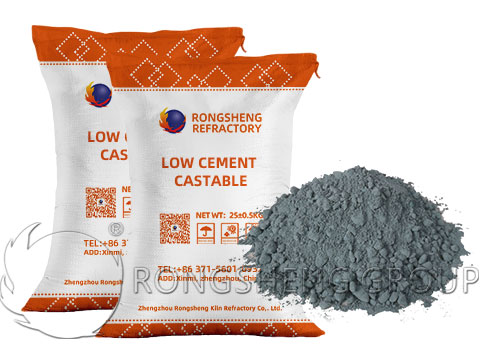
        Low Cement Castable Refractory Cement For Industrial Furnaces High Dense

        Low cement castables have the characteristics of high density, low porosity, high strength, low wear, thermal shock resistance and erosion resistance. Low cement castables not only have the characteristics of traditional refractory materials, but also adopt the most advanced ultrafine powder application technology to improve the medium temperature strength and high temperature volume stability of the castables. The organizational structure of the product forms a firm anchor-shaped multi-directional crystal structure at high temperature. The overall structural connection stability of the lining is ensured, and the service life is increased by 3 times compared with traditional castables.

        Low Cement Castable Directly from Factory
        Low Cement Castable Directly from Factory

        Free Quote

          Leave Your Requirements

          Your Name (required)

          Your Email (required)

          Your Phone


          Your Requirements(required)

          Application of Different Types of Low-Cement Castables

          Low-cement and ultra-low-cement refractory castables have been widely used in industrial kilns in the fields of metallurgical industry, petrochemical equipment, machinery equipment manufacturing and decorative building materials at this stage, and have shown good use effects and economic benefits. Different types of low-cement castables play specific roles in various application fields as follows:

          1. Clay and high-alumina low-cement castables can be used as lining materials for various heat treatment furnaces such as hot blast furnaces, heating furnaces, soaking furnaces, and rotary kilns.
          2. Mullite low-cement castables are used for various high-temperature burner linings, x water-cooling pipe cladding and other applications.
          3. Corundum and chromium-containing corundum low-cement castables are suitable for the refining equipment parts outside the molten steel furnace, the lining of the power frequency induction furnace, the high-temperature wear-resistant lining of the petrochemical catalytic cracking reactor, and other occasions.
          4. Al2O3-SiC-C Low cement castables can be used for the lining of blast furnace tapping troughs, cupola tapping troughs, integral powder spraying guns for molten iron normalization treatment and other parts.
          5. Low cement castables of refractory and Cr-containing refractory can be used as linings of the triangular area of ​​the top of the iron-making electric arc furnace and the linings of the components of the external refining equipment of the molten steel furnace. For example, the overall spray gun lining for the spouting metallurgical industry, the RH and DH vacuum pump degassing device and the prepreg tube lining, the DC induction furnace lining, and the high temperature wear-resistant lining of the catalytic cracking tubular reactor of the petrochemical equipment.
          6. Low cement castables of MgO-Al2O3 or Al2O3-MgO-Al2O3 are used as lining materials for equipment such as ladles and tapping troughs.

          In summary, different types of low cement castables play an important role in various industries and have been widely used and promoted.

          Rongsheng Low Cement Castable Materials
          Rongsheng Low Cement Castable Materials

          Free Quote

            Leave Your Requirements

            Your Name (required)

            Your Email (required)

            Your Phone


            Your Requirements(required)

            Advantages and Characteristics of Rongsheng High-Strength Low-Cement Castables

            Rongsheng Refractory Castables Manufacturer has rich experience in the production and sales of refractory materials. Rongsheng’s environmentally friendly fully automatic amorphous refractory production line provides a reliable guarantee for the timely delivery of Rongsheng’s high-quality refractory castable products. After years of practical experience, Rongsheng has discovered the application advantages and characteristics of high-strength low-cement castables, which can effectively extend the service life of high-temperature industrial furnace linings. If you need to buy high-strength low-cement refractory castables, please contact Rongsheng for free samples and quotes. Happy to share and make progress together. Next is the advantages and characteristics of Rongsheng’s high-strength low-cement castables.

            1. Improve the refractoriness and high temperature strength of the refractory lining.

            Due to the low CaO content in low cement castables, the formation of low eutectic phases in the material can be reduced. Thereby improving the refractoriness, high temperature strength and resistance to slag erosion, especially the cement-free castable has better performance.

            1. The refractory lining has low porosity and high bulk density.

            The amount of mixing water used in the construction of low cement castables is only 1/2 to 1/3 (about 4% to 6%) of ordinary low cement castables. Therefore, the porosity is low and the bulk density is high.

            1. After the construction of the refractory lining is completed, less cement hydrate is generated.

            After the low cement castable is formed and cured, less cement hydrate is generated, and even during heating and baking, there is no phenomenon of a large number of hydration bonds being destroyed and the medium temperature strength being reduced. The low cement castable will gradually sinter as the heat treatment temperature increases, and the strength will gradually increase.

            1. It can improve the structural stability of the refractory lining.

            Low cement castable combines the characteristics of traditional refractory materials, adopts ultrafine powder application technology, and significantly improves the medium-temperature strength and high-temperature volume stability of the castable, so that the product’s organizational structure forms a firm anchor-shaped multi-directional crystal structure at high temperatures. It ensures the overall structural connection stability of the lining, and its service life can be increased by 3 times compared to traditional castables.

              Get Excellent Service

              Please Leave Your Inquiry for Rongsheng Refractory Castable & Cement! We Will Reply You In 12 Hours!

              Your Name (required)

              Your Email (required)

              Your Phone

              Your Requirements(required)