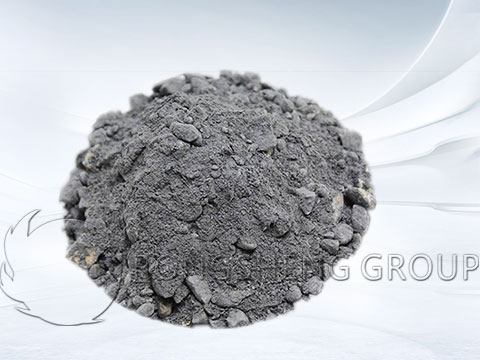
Rongsheng Low-Cement Refractory Castable Manufacturer

Rongsheng, as one of the low-cement castable manufacturers, produces castable refractory castables with low cement content that rely on the addition of micro-powders or sols to achieve cohesion and bonding. Rongsheng low-cement refractory castables use oxide or synthetic compound micro-powders or sols with the same chemical composition as the main castable material as the binder, resulting in low impurity content. Without reducing the castable’s refractoriness and resistance to slag erosion, it can self-bond during long-term use, effectively improving the high-temperature structural strength.
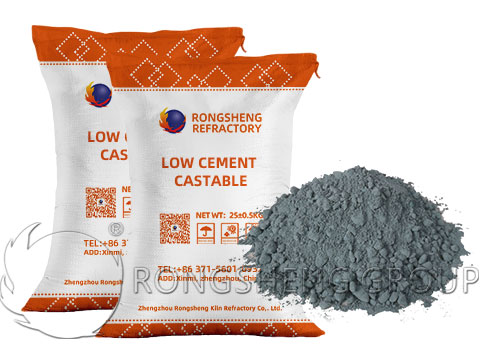
Rongsheng Low Cement Castable Materials
Rongsheng Low-Cement Castable Materials

Free Quote

    Leave Your Requirements

    Your Name (required)

    Your Email (required)

    Your Phone


    Your Requirements(required)

    Bonding Mechanism of Low-Cement Refractory Castables

    There are various bonding methods for low-cement refractory castables. Currently, common methods include silica micropowder (dust silica) bonding, clay bonding, silica sol bonding, and silica-alumina sol bonding. Manufacturers can also choose bonding methods suitable for customer requirements. The setting and hardening mechanism of Rongsheng low-cement castables is as follows: The castable, when mixed with water, first achieves a certain degree of fluidity (or thixotropy) through the addition of dispersants (deflocculants or anti-flocculators) and delayed-acting accelerators. After self-flowing or vibration molding, the castable sets and hardens due to the delayed-acting accelerators.

    Low-cement castables can use oxide micropowders alone as binders, or silica sols and alumina sols as binders, or a combination of oxide micropowders and sols as binders. The choice of binder depends on the chemical composition of the aggregates used. For example, corundum castables should use reactive alumina, or alumina micropowder combined with silica micropowder as binders. Aluminosilicate castables can use silica micro powder or silica sol as binders.

    Hardening of Low-Cement Refractory Castables

    The hardening of low-cement refractory castables requires the addition of a delayed-setting accelerator. This accelerator is a type of agent that slowly hydrolyzes and ionizes in water, releasing counterions with the opposite charge to the surface charge of the micro-powder or colloidal particles. When the adsorbed counterions on the particle surface reach the “isoelectric point,” the particles aggregate and harden through drying.

    Performance Characteristics of Low-Cement Refractory Castables

    Compared to calcium aluminate cement-bonded castables, low-cement refractory castables have a slower setting and hardening rate, and slightly lower strength after room temperature curing. They are suitable for direct casting into monolithic linings on-site. Their long-term operating temperature is higher than that of sol-bonded castables of the same material. Low-cement castables can be used as linings for high-temperature vessels under more demanding operating conditions, such as monolithic linings for induction furnaces and steel ladles.
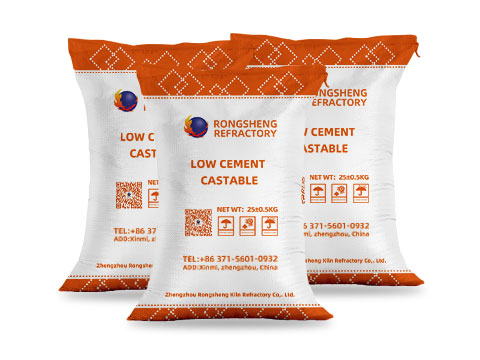
    Low Cement Castable Directly from Factory
    Low-Cement Castable Directly from Rongsheng Factory

    Free Quote

      Leave Your Requirements

      Your Name (required)

      Your Email (required)

      Your Phone


      Your Requirements(required)

      Analysis Report on Thermal Shock-Resistant Low-Cement Castables

      This experiment utilized ultrafine silica fume and high-efficiency water-reducing agent technology to reduce the amount of cement in refractory castables. This resulted in a dense structure with low porosity, improved mid-temperature strength, and excellent erosion and abrasion resistance. Adding SiC micron powder to low-cement castables already incorporating silica fume significantly impacted the material’s strength and thermal shock resistance.

      To investigate the effect of SiC micron powder on the performance of low-cement castables already incorporating silica fume, samples A, B, C, and D were prepared. All four samples used the same aggregate material, dosage, and particle size distribution, with a total fine powder (including micron powder) content of 30%. The fine powder in sample A has a chemical composition of CaO/11.12%, Al2O3/60.16%, and SiO2/28.72%, and is composed of high-alumina cement, grade I bauxite clinker powder, and silica fume. Other samples B, C, and D, while maintaining the same total amount of fine powder, gradually replaced the fine powder in sample A with 325-mesh SiC micro-powder; the specific composition is shown in Table 1. Different amounts of high-efficiency water-reducing agent were added to each sample to ensure the same amount of water was used during molding. Each sample was made into a 4cm × 4cm × 16cm specimen, vibrated, and cured at 40℃ for 24 hours. The number of thermal shock tests after firing at 1450℃ was then measured. The results were compared by directly immersing each sample from 1450℃ to 20℃ cold water without cracking. The experiment also measured the apparent porosity, bulk density, and linear change rate of each sample after calcination at 1450 ℃ for 4 h, and compared the fine powder of each sample.

      SiC has good thermal conductivity, and its introduction into low-cement, high-alumina castables is beneficial for improving thermal stability. However, the amount of SiC micropowder added is not large enough to be the main reason for a significant improvement in thermal shock resistance. The thermal shock resistance of a material largely depends on its microstructure. The oxidation of SiC micropowder in the samples increases the porosity of the material. Since the SiC micropowder is uniformly dispersed in the fine powder, the pore distribution formed in the material matrix during calcination is also uniform, which is equivalent to a large number of microcracks uniformly distributed in the matrix. The Hasseman theory states that the more microcracks there are, the shorter the final length reached by crack propagation under the critical temperature difference, and smaller cracks can propagate in a quasi-static manner, avoiding catastrophic fracture. Therefore, the addition of SiC micro powder to the fine powder improves the thermal stability of the castable matrix, which in turn greatly enhances the overall thermal shock resistance of the material.

      Rongsheng Low-Cement Castable Manufacturer

      The simultaneous addition of SiC micropowder to low-cement high-alumina castables containing silica fume and high-efficiency water-reducing agents significantly improves the material’s thermal shock resistance due to the oxidation of SiC, which causes the fine powder portion of the castable to form a microstructure beneficial to thermal stability at high temperatures. However, the increased porosity delays the sintering process, resulting in a slight decrease in the compressive strength of the SiC-doped samples after firing at 1450 °C. The formation of more needle-like mullite somewhat compensates for this strength reduction.
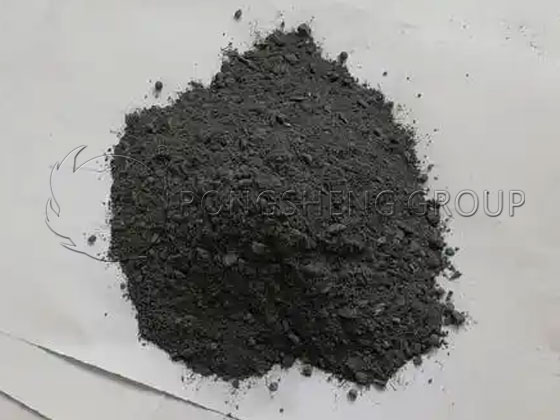
        Get Excellent Service

        Please Leave Your Inquiry for Rongsheng Refractory Castable & Cement! We Will Reply You In 12 Hours!

        Your Name (required)

        Your Email (required)

        Your Phone

        Your Requirements(required)

        Thermodynamic Properties of Al2O3-SiC-C Castables

        Al2O3-SiC-C castables have excellent thermal shock resistance and slag resistance, and are widely used in blast furnace tapping channels, ladle linings, and slag lines of mixed iron furnaces. Al2O3-SiC-C (hereinafter referred to as ASC) castables mostly use ultra-low cement bonding systems composed of alumina micropowder, silica micropowder, and a small amount of calcium aluminate cement. Compared with ultra-low cement bonding, calcium aluminate cement bonding without silica micropowder and cement-free bonding have the characteristics of high purity and small amount of liquid phase generated at high temperature. Therefore, it has excellent high-temperature mechanical properties and slag resistance.

        Al2O3-SiC-C Castable Refractory
        Al2O3-SiC-C Castable Refractory

        Free Quote

          Leave Your Requirements

          Your Name (required)

          Your Email (required)

          Your Phone


          Your Requirements(required)

          Bonding Methods of ASC Castables

          For a long time, people have been accustomed to the ultra-low cement bonding method and the application of silica powder in ASC castables. Therefore, there are few applications and research on calcium aluminate cement bonded ASC castables without silica powder. Common cement-free bonding methods for castables mainly include silica powder agglomeration bonding, hydrated alumina bonding and sol bonding. The shortcomings of silica powder agglomeration bonding are low body strength, hydrated alumina bonding body strength, poor burst resistance, etc., which make these two bonding methods less used in ASC castables. In recent years, with the development of silica sol bonded castable technology, a small amount of silica sol bonded ASC castables have appeared on the market. With the development of alumina sol bonding system, alumina sol bonded ASC castables that replace hydrated alumina may have better performance.

          It is well known that the good thermal conductivity of silicon carbide and carbon in ASC castables gives the material better thermal shock resistance, and the non-wettability of carbon and slag gives the material better slag resistance. Carbon plays a key role in the structure and performance of ASC castables. However, carbon is easily oxidized at high temperatures, which deteriorates the material structure and performance. Carbon can be oxidized by oxygen in the atmosphere and by the material’s own oxide components, such as SiO2. When SiO2 and carbon coexist, the generation and escape of SiO2 gas at high temperatures will consume the carbon in the material, increase the porosity of the material, and thus deteriorate the performance of the material. It can be seen that as far as ASC castables are concerned, the SiO2 component may have an adverse effect on its performance. Based on the above analysis, this work studied the changes in phase composition and chemical composition of four common bonding methods of ASC castables: silica sol, silica-free micropowder cement, hydrated alumina and ultra-low cement, and conducted thermodynamic analysis.

          Rongsheng Al2O3-SIC-C Castable
          Rongsheng Al2O3-SIC-C Castable

          Free Quote

            Leave Your Requirements

            Your Name (required)

            Your Email (required)

            Your Phone


            Your Requirements(required)

            Thermodynamic Properties of Al2O3-SiC-C Castables

            (1) After calcination at 1350℃, the mass of all samples with different bonding methods increased significantly. Compared with the samples calcined at 1350℃, the mass change rate of the samples calcined at 1500℃ decreased significantly except for the pure calcium aluminate cement bonding method without silica powder.

            (2) Thermodynamic analysis showed that under the carbon coexistence calcination conditions in the Si-O-C-N system, SiO2 is a stable phase when the temperature is below 1431℃, and SiC is a stable phase when the temperature is above 1431℃. Si and SiC in Al2O3-SiC-C castables are oxidized by CO at low temperatures, which increases the C and SiO2 contents in the castables.

            (3) Under the carbon coexistence calcination conditions, the stability order of SiO2-containing compounds is: cristobalite < mullite < anorthite. Under the condition of 1500℃ carbonization, both cristobalite and mullite can be reduced by C, while anorthite can only be reduced by C when there is enough Al2O3 around it. When the temperature does not exceed 1550℃, Si can prevent C from being oxidized by SiO2-containing compounds, and SiC can only prevent C from being oxidized when the temperature is lower than 1431℃.

            (4) When the SiO2 content in the material is high, more SiO gas will escape from the reaction, which will lead to a reduction in sample mass and unstable structure. Considering that silica can promote the formation of SiC, the amount of silica powder added to ASC castables should be minimized.

            Low Cement Silicon Carbide Castable in RS Factory
            Low Cement Silicon Carbide Castable in RS Factory

            Free Quote

              Leave Your Requirements

              Your Name (required)

              Your Email (required)

              Your Phone


              Your Requirements(required)

              Low Cement SiC Refractory Castable

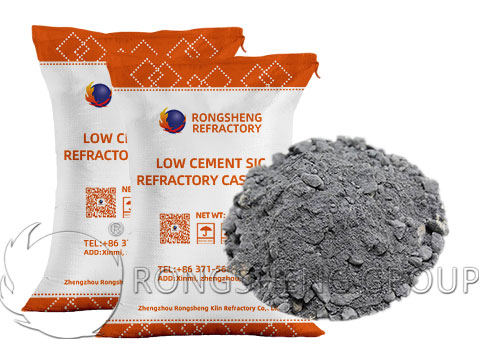
              Low cement SiC refractory castable is characterized by low linear expansion coefficient, high thermal conductivity, high strength and good wear resistance. It has been applied in thermal equipment such as power generation boilers, non-ferrous metallurgical furnaces and incinerators, and the use effect is good. Low cement SiC refractory castable uses silicon carbide with SiC greater than 97% as refractory aggregate and powder, adds SiO2 ultrafine powder and metal silicon antioxidant, uses CA-70 cement as binder and adds polyphosphate water reducer. The main properties of this material are SiC of 85%, 110℃ drying bulk density, pressure resistance and flexural strength are 2.5g/cm3, 45MPa and 9MPa respectively. After burning at 1000℃, the linear change, pressure resistance and flexural strength are -0.2%, 107MPa and 24MPa respectively. After firing at 1450℃, the linear change, compressive strength and flexural strength are +0.3%, 130MPa and 54MPa respectively, and the thermal conductivity at 400℃ is 12.2W/(m·K).

              Rongsheng Refractory Castable Manufacturer

              Rongsheng Refractory Castable Manufacturer, advanced environmentally friendly fully automatic amorphous refractory production line, specializes in providing refractory products for high-temperature industrial furnace linings. Rongsheng’s refractory products have been sold to more than 120 countries and regions around the world, including South Africa, Chile, Egypt, Colombia, Uzbekistan, Italy, Indonesia, Ukraine, Hungary, Spain, Kenya, Syria, Zambia, Oman, Venezuela, India, Peru, the United States, Ethiopia, Iran, Iraq, Israel, etc. If you need to buy high-quality silicon carbide refractory castables, low-cement silicon carbide refractory castables, Al2O3-SiC-C castables, please contact Rongsheng manufacturers. Get free samples and quotes.

                Get Excellent Service

                Please Leave Your Inquiry for Rongsheng Refractory Castable & Cement! We Will Reply You In 12 Hours!

                Your Name (required)

                Your Email (required)

                Your Phone

                Your Requirements(required)