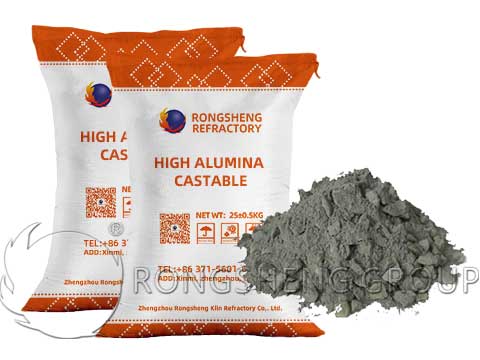
Industrially, unshaped refractories with Al₂O₃ ≥ 45% are generally referred to as high-alumina unshaped refractories. Rongsheng Refractory Castable Manufacturer. High-alumina castables are also classified into three grades based on Al₂O₃ content: Grade 1 has an Al₂O₃ content greater than 75%; Grade 2 has an Al₂O₃ content of 60%–75%; and Grade 3 has an Al₂O₃ content of 48%–60%. Their main mineral components are corundum, mullite, and a glassy phase.
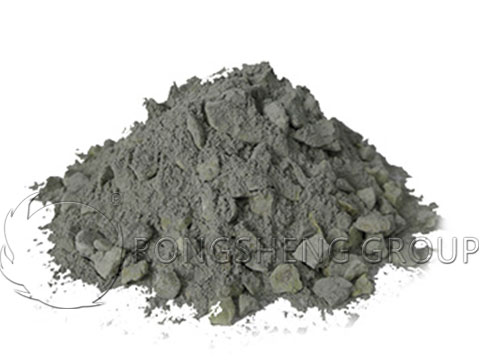
Factors Affecting the Performance of High-Alumina Castables
Many factors affect the performance of high-alumina castables, primarily the composition of the raw materials and construction conditions. Regarding raw material composition, the performance of the castable can be optimized by controlling the structure, particle size, component content, or type of binder of the aggregates, and by adding appropriate amounts of fine powder and admixtures. In terms of construction, factors such as the amount of water added during construction and the baking conditions also affect the performance of the castable.
The Influence of Fine Powders in Castables on Their Performance
Castables typically incorporate various fine powders, which, through the combined action of binders and additives, form a matrix. The particle size and amount of fine powders affect the matrix structure. Since the matrix is most susceptible to erosion by the medium, it is often the first component to be damaged under stress. Therefore, it is necessary to optimize the state of the fine powders to improve their reaction with other components in the matrix, allowing them to bind aggregates and fill voids after high-temperature treatment, achieving close packing and promoting sintering. This, in turn, improves the room-temperature physical properties and performance of high-alumina castables. The fine powders added to high-alumina castables mainly include silicon powder, silicon carbide micropowder, Al powder, and Al₂O₃ micropowder.
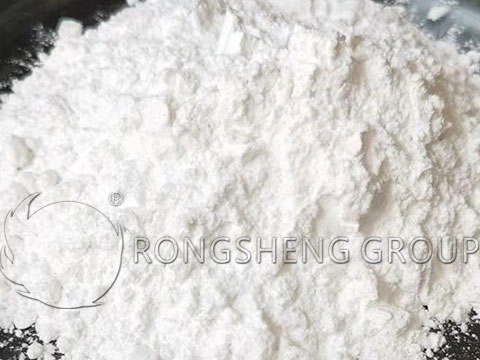
Effects of Silica Powder Addition on Castable Properties
High-alumina castables were prepared using bauxite particles as aggregate, with the addition of bauxite fine powder and silica powder, and calcium aluminate cement and p-Al₂O₃ micropowder as binders. The effects of silica powder addition (1%, 3%, and 5%) on various properties of the high-alumina castables were investigated. The study found that with increasing silica powder addition, the flowability of the castable decreased, and the linear shrinkage rate after firing increased. Appropriate silica powder addition can improve the creep resistance of the castable. This is because silica powder is oxidized during high-temperature heat treatment, and the oxidized silicon reacts with the matrix components in a mullitization reaction, causing the volume of the castable to expand and the linear shrinkage rate to increase. When the molar ratio of Al₂O₃ to SiO₂ in the matrix reaches a certain value, after the mullitization reaction is complete, the newly added SiO₂ glass phase will reduce the creep resistance of the castable.
The effect of elemental silica powder addition on ultra-low cement-bonded high-alumina castables was also investigated. The samples were subjected to high-temperature heat treatment in oxidizing, neutral, and reducing atmospheres. It was found that increasing the amount of elemental silicon powder gradually increased the high-temperature flexural strength of the samples after firing, especially after heat treatment in a neutral atmosphere where the change in flexural strength was most significant. The introduced silicon powder reacted in situ in an oxidizing atmosphere to form columnar mullite, in a reducing atmosphere to form silicon carbide whiskers, and in a nitrogen-neutral atmosphere to form fibrous silicon nitride. These in-situ formed phases significantly improved the strength of the castable.
Different amounts of silicon powder were introduced into traditional high-alumina castables, and heat treatment was performed under oxidizing, carbon-embedded, and nitriding atmospheres to investigate the effect of silicon powder on the strength properties of the castables. After heat treatment at 1450℃, the bulk density of the samples under the three atmospheres decreased slightly with increasing silicon powder content. With increasing silicon powder content, the room-temperature flexural strength of the samples gradually decreased under oxidizing and reducing atmospheres and after heat treatment at 1450℃, while the room-temperature flexural strength of the samples significantly increased after heat treatment in a nitriding atmosphere. The high-temperature flexural strength increased with increasing silica powder content under all three atmospheres, with the highest strength observed in the nitriding atmosphere and the lowest in the oxidizing atmosphere. With continuous introduction of silica powder, the sample under the oxidizing atmosphere gradually expanded, while the sample under the nitriding atmosphere initially contracted and then expanded, and the sample under the reducing atmosphere continued to contract. In summary, heat treatment under the nitriding atmosphere had the least impact on the permanent linear shrinkage rate of the castable. With increasing silica powder content, the sample heat-treated under the reducing atmosphere exhibited the best thermal shock resistance, followed by the sample heat-treated under the nitriding atmosphere.
Influence of SiC Micropowder Addition on Castable Properties
In preparing high-alumina castables, high-grade bauxite was used as aggregate, pure calcium aluminate cement as binder, and α-Al₂O₃ micropowder, SiO₂ micropowder, corundum fine powder, and SiC fine powder were added as main raw materials. The effect of varying SiC micropowder addition on the properties of the high-alumina castable was studied. The results showed that the water requirement of the castable increased with the addition of SiC micropowder. Therefore, excessive addition of SiC micropowder has an adverse effect on the low-temperature flexural strength of castables. At high temperatures, a liquid phase forms on the surface of the castable, reducing its strength and wear resistance. Appropriate addition of fine SiC powder is beneficial to improving the cold-state flexural strength of the castable. The amount of water added increases with decreasing SiC particle size; the easier the castable is to sinter, the higher its cold-state flexural strength, and the better its thermal shock resistance. This is because a gap structure is created around the SiC particles, which is more conducive to improving the thermal shock resistance of the castable.
In the preparation of high-alumina castables, using high-grade bauxite clinker, SiC, and silica micropowder as the main raw materials, and calcium aluminate cement as the binder, the effects of silicon carbide addition (1%, 2%, 3%, 4%, and 5%) on the room-temperature physical properties, thermal shock resistance, flexural strength, and slag resistance of the high-alumina castables were studied. The results show that the addition of SiC improves the strength of the castable, especially its thermal shock resistance. After various temperature treatments, the apparent porosity of the castable generally decreased while the bulk density increased with increasing SiC content. With the addition of SiC, the flexural strength of the samples after heat treatment at 1350℃ continuously increased, while the compressive strength reached its maximum at a SiC content of 3%, and then showed a downward trend. After heat treatment at 1500℃, the flexural strength of the samples first increased and then decreased; after the SiC content reached 3%, the compressive strength of the samples gradually decreased. The corrosion resistance of the samples with added SiC at high temperatures is unstable. This is because SiC can be oxidized at low temperatures, and a SiO₂ protective film forms on the surface of the samples at high temperatures, providing some protection. However, when the temperature continues to rise, the SiO₂ protective film is destroyed, causing damage to the material.
The Effect of Fly Ash Powder Addition on Castable Properties
With the development of the power industry, fly ash is currently one of the industrial wastes with the largest discharge volume. This study investigated the effects of introducing fly ash into high-alumina castables (0, 2%, 4%, 6%, 8%, and 10%) on the microstructure and various properties of the castables. The results showed that with increasing fly ash addition, the room-temperature flexural strength of the high-alumina castable continuously decreased, the bulk density significantly decreased, the apparent porosity increased, and the thermal conductivity decreased. This is because the addition of fly ash reduces the pore size of the samples. When a certain amount is added, the pore size is adjusted to the micrometer scale and uniformly distributed in the matrix, improving the material’s thermal insulation performance and effectively reducing heat loss.
The Effect of SiO₂ Micropowder Addition on Castable Properties
In the preparation of high-alumina castables, bauxite clinker and coke were used as aggregates, α-Al₂O₃ micropowder and SiO₂ micropowder were used as matrix materials, and high-alumina cement was used as binder. The effect of the amount of SiO₂ micropowder added on the properties of high-alumina castables was investigated. The study showed that the addition of an appropriate amount of SiO₂ micropowder reduced the water demand of the castable, achieving a certain water-reducing effect, and maintaining good flowability. Excessive addition led to powder agglomeration, making it difficult for the internal components of the castable to achieve a good bonding effect, and increasing the water demand, thus reducing the flowability. The cold flexural strength and compressive strength of the castable generally increased with the addition of SiO₂ micropowder, while the apparent porosity gradually increased, the bulk density decreased, and the linear shrinkage rate after firing remained stable.
The effect of adding SiO₂ micropowder of different specifications on the properties of high-alumina castables was also studied. Studies have found that the addition of SiO₂ micropowder of different specifications leads to significant differences in the rheological properties of castables. Larger SiO₂ micropowder particle sizes are more detrimental to the rheological properties of the castable, resulting in decreased flexural strength and compressive strength at room temperature. However, the specific surface area of SiO₂ micropowder has a relatively small impact on the rheological properties of the castable.
High-alumina castables were prepared using high-alumina homogeneous material, activated alumina micropowder, and SiO₂ micropowder as the main raw materials, and calcium aluminate cement as the binder. The effect of SiO₂ micropowder addition on the castable properties was investigated. Results showed that the flexural strength and compressive strength of the castable at room temperature first increased and then decreased with the addition of SiO₂ micropowder. After heat treatment at 1100℃, the apparent porosity of the castable first decreased and then increased with the increase of SiO₂ micropowder, the bulk density first increased and then decreased, the linear change rate increased, and the wear amount first decreased and then increased. The castable exhibits the best wear resistance when the SiO₂ powder content is 6%.
The Effect of Fly Ash Powder Addition on Castable Properties
With the development of the power industry, fly ash is currently one of the industrial wastes with the largest discharge volume. This study investigated the effects of introducing fly ash into high-alumina castables (0, 2%, 4%, 6%, 8%, and 10%) on the microstructure and various properties of the castables. The results showed that with increasing fly ash addition, the room-temperature flexural strength of the high-alumina castable continuously decreased, the bulk density significantly decreased, the apparent porosity increased, and the thermal conductivity decreased. This is because the addition of fly ash reduces the pore size of the samples. When a certain amount is added, the pore size is adjusted to the micrometer scale and uniformly distributed in the matrix, improving the material’s thermal insulation performance and effectively reducing heat loss.
The Effect of SiO₂ Micropowder Addition on Castable Properties
In the preparation of high-alumina castables, bauxite clinker and coke were used as aggregates, α-Al₂O₃ micropowder and SiO₂ micropowder were used as matrix materials, and high-alumina cement was used as binder. The effect of the amount of SiO₂ micropowder added on the properties of high-alumina castables was investigated. The study showed that the addition of an appropriate amount of SiO₂ micropowder reduced the water demand of the castable, achieving a certain water-reducing effect, and maintaining good flowability. Excessive addition led to powder agglomeration, making it difficult for the internal components of the castable to achieve a good bonding effect, and increasing the water demand, thus reducing the flowability. The cold flexural strength and compressive strength of the castable generally increased with the addition of SiO₂ micropowder, while the apparent porosity gradually increased, the bulk density decreased, and the linear shrinkage rate after firing remained stable.
The effect of adding SiO₂ micropowder of different specifications on the properties of high-alumina castables was also studied. Studies have found that the addition of SiO₂ micropowder of different specifications leads to significant differences in the rheological properties of castables. Larger SiO₂ micropowder particle sizes are more detrimental to the rheological properties of the castable, resulting in decreased flexural strength and compressive strength at room temperature. However, the specific surface area of SiO₂ micropowder has a relatively small impact on the rheological properties of the castable.
High-alumina castables were prepared using high-alumina homogeneous material, activated alumina micropowder, and SiO₂ micropowder as the main raw materials, and calcium aluminate cement as the binder. The effect of SiO₂ micropowder addition on the castable properties was investigated. Results showed that the flexural strength and compressive strength of the castable at room temperature first increased and then decreased with the addition of SiO₂ micropowder. After heat treatment at 1100℃, the apparent porosity of the castable first decreased and then increased with the increase of SiO₂ micropowder; the bulk density first increased and then decreased, the linear change rate increased, and the wear amount first decreased and then increased. The castable exhibits the best wear resistance when the SiO₂ powder content is 6%.